
For over a century, scholars believed they understood how civilization developed. The story went like this: First, humans invented agriculture. Then they settled into villages. Then they developed complex social structures. Then they built temples. Religion was a product of civilization, not its cause.
Göbekli Tepe shattered this narrative.
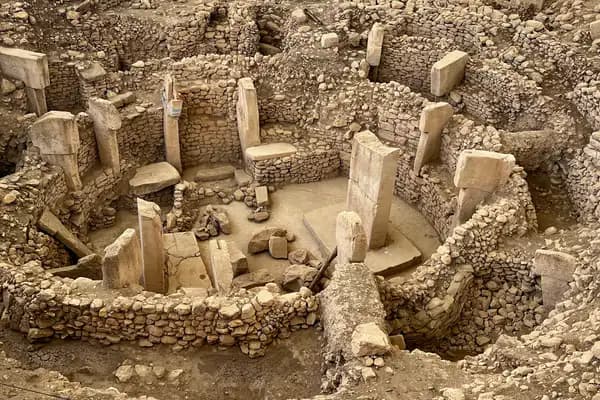
The site was built by hunter-gatherers who had no permanent settlements, no domesticated crops, no pottery. Yet they created a monumental temple complex that rivaled anything built for the next 6,000 years. This means that complex religion, monumental architecture, and large-scale social cooperation existed BEFORE agriculture.
Klaus Schmidt proposed a revolutionary reinterpretation: "First came the temple, then the city." Religion was not a product of civilization — it was the engine that drove its creation.
Here's how it might have worked: Göbekli Tepe was so important that people traveled from across the region to participate in its construction and rituals. Feeding these pilgrims required enormous quantities of food. Hunter-gatherers could not easily provide such quantities. So people began to cultivate wild grains nearby — the first tentative steps toward agriculture.
Archaeological evidence supports this theory. The earliest domesticated wheat (einkorn) was first cultivated at Karacadağ, a mountain visible from Göbekli Tepe, around the same time the temple was active. The site may have created the conditions for agriculture to emerge.
If Schmidt is right, then religion is not a side effect of human civilization — it is its foundation. The desire to worship together, to build sacred spaces, to commune with the divine — this desire drove humans to settle down, develop agriculture, and build the first cities.
This is the true significance of Göbekli Tepe. It is not just the oldest temple — it is evidence that spirituality is central to what makes us human.