
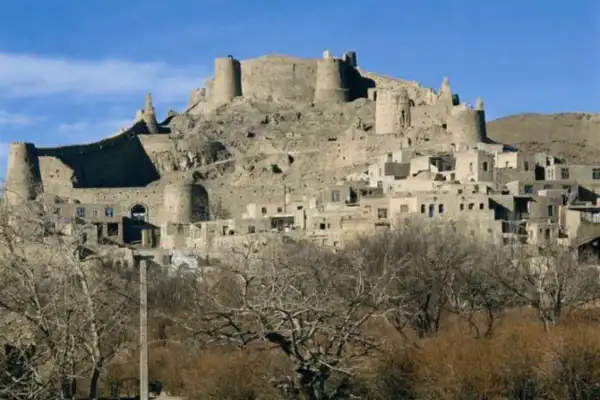
In 1272, a Venetian merchant named Marco Polo traveled through the mountains of northern Persia. He never set foot in Alamut Castle — the Mongols had destroyed it sixteen years earlier. But in the markets along the Silk Road, he heard a story so wild it would survive for eight centuries. A hidden valley between two mountains, turned into the most beautiful garden ever made — golden pavilions, streams of wine and honey, and the most beautiful women in the world.
Here’s how the legend went. Hassan-i Sabbah — the leader the Crusaders called “the Old Man of the Mountain” — would pick young men from nearby villages, drug them unconscious, and carry them into this garden. When they woke up, they thought they’d literally entered Paradise. Beautiful women, endless feasts, every pleasure imaginable. Days later, they’d be drugged again and pulled out. Then Hassan would tell them: only I can send you back. Obey me — even if it means dying — and it’s yours forever.
That’s how, according to the legend, he built the most fearless killers the medieval world had ever seen. Men who didn’t just accept death — they ran toward it, believing one last mission would buy them eternity. Crusaders watched as these agents slipped into royal courts disguised as monks or soldiers, struck with a single dagger in broad daylight, and never tried to escape. Their rivals called them hashishin — a slur meaning “hasshish users.” When that word reached Europe, it became “assassin.”
Here’s the thing: none of it was true. Historian Farhad Daftary, whose 1994 book became the definitive study of these myths, proved the garden never existed. No source from Hassan’s own people mentions it. No Muslim writer of the era mentions drug use. When the Mongol historian Juvayni personally inspected Alamut after capturing it in 1256, he found storage rooms, workshops, and a library — but no golden pavilions, no wine, no garden. Polo was repeating bazaar gossip about a place he never saw.
The real Hassan-i Sabbah was nothing like the legend. He was a fiercely disciplined scholar who executed his own son for drinking wine. He took Alamut — a fortress on a sheer cliff in northern Iran — in 1090, reportedly without a drop of blood. He spent thirty-four years inside without ever leaving, building one of the great libraries of the Islamic world. His followers weren’t drugged zombies. They were educated men who learned languages, studied diplomacy, and acted from genuine religious conviction.
The real “gardens” of Alamut? Agricultural terraces, irrigated by hand-carved water channels and cisterns cut deep into limestone cliffs. Not pavilions of gold. Not streams of honey. Just brilliant engineering that fed a community of scholars, soldiers, and families in one of the most remote valleys on earth. Some of those cisterns still hold water today, almost a thousand years later.
And yet Marco Polo won. His story — told by a man who was never there, about events that never happened, dictated to a novelist in a prison cell — gave English the word “assassin.” It inspired Assassin’s Creed, bringing millions of players into a world still shaped by that fantasy. The real Hassan — a scholar who took a fortress without bloodshed and never left for thirty-four years — is almost unknown. The most dangerous weapon in history was never a dagger. It was a story no one bothered to check.