
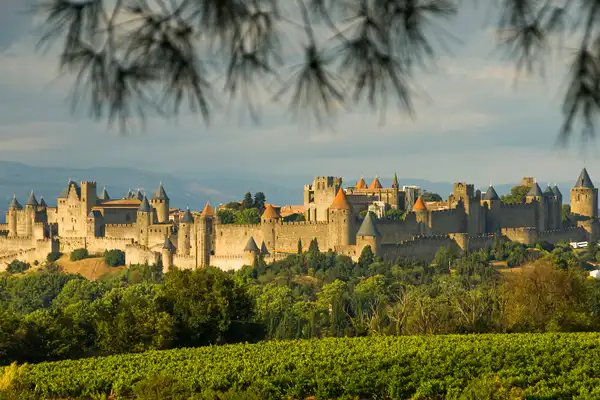
In the early 9th century, Charlemagne — the most powerful ruler in Europe — brought his mighty army to besiege Carcassonne. The city was held by a Saracen lord named Balaak, but Balaak had died during the siege, leaving his wife, a noblewoman named Carcas, to defend the fortress alone.
For five years, the siege dragged on. Charlemagne's patience was legendary, and his armies were vast. But the walls of Carcassonne were strong, and Carcas was stronger. One by one, the garrison's soldiers fell to disease, starvation, and arrows. Eventually, only Carcas herself remained, moving from tower to tower, propping up straw soldiers dressed in armor and manning crossbows herself to create the illusion of a full garrison.
But by the end of the fifth year, the food was almost gone. Carcas ordered an inventory: there remained one pig and one sack of grain. A lesser commander would have surrendered. Carcas had a better idea.
She force-fed the entire sack of grain to the pig, fattening it as much as possible. Then she hurled the pig over the walls, where it crashed at the feet of Charlemagne's soldiers and burst open, spilling grain from its stomach across the ground.
The effect was devastating — to Charlemagne's morale, not Carcas's. The besieging army looked at the fat, grain-stuffed pig and reached the obvious conclusion: if the city had so much food that they could afford to throw away a fattened pig, then Carcassonne could hold out forever. After five years of fruitless siege, Charlemagne ordered his army to withdraw.
As the great emperor's forces retreated, Dame Carcas ordered the church bells to ring in celebration. A soldier in Charlemagne's rearguard heard them and reported to the emperor: "Sire! Carcas sonne!" (Carcas rings!) — and so the city received its name.
The story is almost certainly legendary — the name Carcassonne predates Charlemagne by centuries — but it captures something true about the spirit of the place: a fortress that has never been conquered by force alone, and that owes its survival to intelligence as much as stone walls.