
wife, expressing his gratitude. Over the following weeks, Blood visited repeatedly, cultivating a friendship with the unsuspecting keeper. He flattered Edwards, dined with his family, and even proposed a marriage between his fictitious wealthy nephew and Edwards' daughter. The old man was completely charmed.
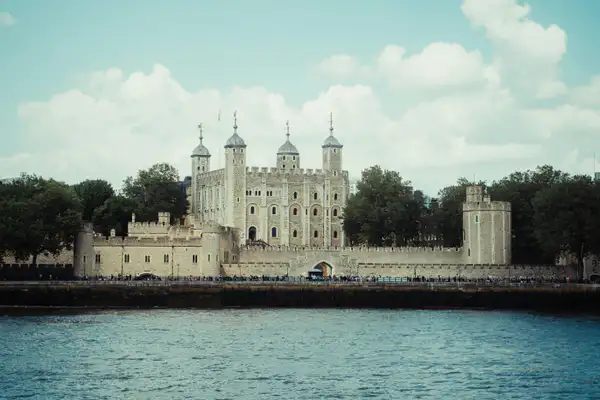
On the morning of May 9, 1671, Blood arrived at the Tower with three accomplices — his son Thomas Blood Junior, Robert Perrott, and Richard Halliwell — claiming his nephew had come to see the Crown Jewels before the wedding. Edwards led the group into the Jewel Room. The moment the door closed, Blood threw a cloak over Edwards' head, stuffed a gag into his mouth, and struck him with a wooden mallet. When the old man resisted — with remarkable courage for a man of seventy-seven — Blood stabbed him in the stomach with a stiletto blade and beat him unconscious. The thieves then set about dividing the spoils with lunatic efficiency. Blood used the mallet to flatten the State Crown so it could be stuffed into a bag concealed under his parson's cloak. Perrott shoved the Sovereign's Orb down his breeches. Halliwell attempted to file the Sovereign's Sceptre in half to fit it in a bag, but the two-foot golden rod resisted.
At that precise moment, by an almost miraculous coincidence, Edwards' son — Captain Beckman Edwards — arrived at the Tower unexpectedly, having returned from military service in Flanders. Finding his father's quarters empty and hearing muffled groaning from the basement, he raised the alarm. Blood and his accomplices fled toward the gate, Blood firing a pistol to clear his path and shouting "Stop the traitor!" — pointing behind him to misdirect the pursuers. They nearly made it. Blood reached the outer gate and was within yards of his horse when Captain Edwards and a warder named Captain Martin tackled him. As he was pinned to the ground, the flattened Crown tumbled from his cloak. Perrott dropped the Orb. The Sceptre was recovered from Halliwell's bag, still bearing the file marks.
What followed was perhaps more extraordinary than the theft itself. Brought before King Charles II for personal interrogation — an almost unprecedented honor for a common criminal — Blood refused to speak to anyone but the King directly. When questioned, he displayed such wit, composure, and brazen charm that Charles was reportedly fascinated. Blood allegedly told the King that the Crown Jewels were worth only £6,000 (a deliberate undervaluation designed to minimize the crime), that he had abandoned a plot to assassinate Charles because the King's bearing had been so majestic, and that executing him would only create a martyr. Incredibly, Charles II not only pardoned Blood but granted him Irish lands worth £500 a year and a position at court. The reasons for this astonishing clemency have puzzled historians for centuries. Some believe Blood was secretly working for the King as a spy and the robbery was a covert intelligence operation. Others suggest Charles simply admired audacity. The Duke of Ormonde, whom Blood had previously tried to kidnap, was furious. As for Talbot Edwards — the loyal, elderly keeper who was beaten, stabbed, and left for dead — he survived his injuries and was given a reward of £200, less than half of Blood's annual pension. The Crown Jewels were moved to better-protected quarters, but the ironies of the case remain unresolved: the man who stole the crown was rewarded, and the man who defended it was given a fraction of the thief's pension. Colonel Blood died in 1680 of natural causes, comfortable, pardoned, and pensioned — the only person in history to steal the Crown Jewels and live to tell the tale.