
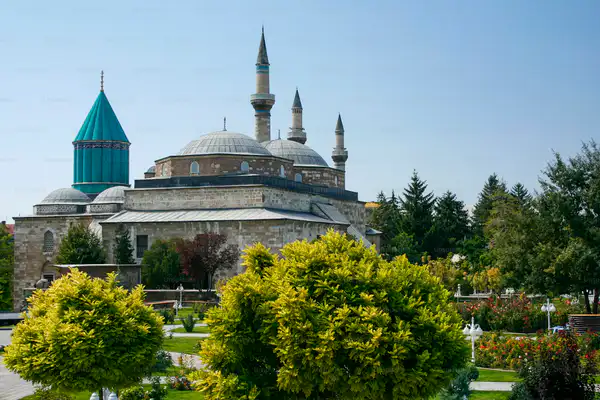
Rumi's funeral on December 17, 1273, was unlike any other in medieval Anatolia. The streets of Konya filled with mourners from every faith and nation. Muslims, Christians, Jews, and Zoroastrians walked together in the procession, each reciting from their own scriptures.
A Christian priest asked a Muslim scholar: "Why are you here? He was a Muslim saint." The Muslim replied: "We came to honor a man who showed us that all paths lead to the same truth." A Jew was asked the same question and answered: "He taught us that love transcends religion. He was our teacher too."
When someone asked the non-Muslim mourners directly why they had come, they replied: "He was our sun too. We learned more about our own scriptures from him than from our own teachers. We found in him the signs and qualities of a prophet and a saint."
The funeral procession included standard-bearers, a portable incense burner, and Quran boxes, with Rumi's body in a white shroud carried on a decorated bier. But it also included Christian crosses, Jewish prayers, and Zoroastrian symbols. For one day, in one city, the barriers between religions dissolved — not through force or conversion, but through love.
This moment embodies Rumi's entire philosophy: "I looked with the same eye on Muslim, Jew, and Christian alike." His universal love had created a universal funeral — a testament to the power of spiritual unity that transcends religious boundaries.