
On August 17, 1661, Nicolas Fouquet — Finance Minister of France and one of the wealthiest men in all of Europe — made the worst mistake of his life: he threw a party. At his newly completed château of Vaux-le-Vicomte, south of Paris, he hosted a celebration so breathtaking that the young King Louis XIV stood speechless. And in that moment, Fouquet's fate was sealed forever.
That evening, everything was beyond excess. The feast was served on solid gold plates — while the king himself only had silver. Molière, the greatest playwright of the age, personally performed a comedy written for the occasion. The Italian master Torelli staged a fireworks display that lit up the sky. Le Nôtre's gardens seemed to stretch to the horizon. Six thousand guests wandered through halls decorated with paintings that glorified the Fouquet family as though they were royalty.
Louis XIV was just twenty-three years old, but he was no fool. He watched every last detail with ice-cold fury. In his mind, one rule was absolute: no subject, no matter how rich or powerful, should ever outshine the king. His mother, Anne of Austria, sensed the danger and physically grabbed his arm — he was about to have Fouquet arrested on the spot. "You don't arrest a host under his own roof," she whispered. The king clenched his jaw and said nothing. He knew how to wait.
They say the third time's the charm. For Fouquet, the third week was the end. Louis sent d'Artagnan — yes, the real d'Artagnan, not the fictional character but the actual captain of the king's musketeers — to arrest his former minister. Fouquet was tried for embezzlement and sentenced to exile. But the king found the punishment too soft. He personally changed the verdict: life imprisonment, with no hope of pardon.
Fouquet spent the last nineteen years of his life locked away in the fortress of Pignerol, deep in the Alps. Completely cut off from the world, with no visitors and no contact. Some historians believe he became the mysterious "Man in the Iron Mask" — that famous prisoner whose face was hidden and whose identity was never revealed. What we know for certain is that Fouquet never saw freedom again.
But here's where the story takes its most extraordinary turn — and perhaps its cruelest. Louis didn't destroy what Fouquet had built. He didn't burn it down or leave it to rot. He did something far more ruthless: he hired Fouquet's entire creative team. The architect Le Vau, the painter Le Brun, the garden designer Le Nôtre, even Molière himself. And he gave them one single order: build me something that makes Vaux-le-Vicomte look like a garden shed.
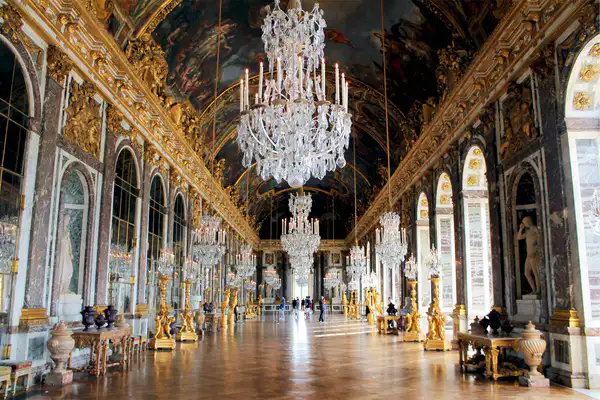
That something was Versailles. The greatest palace in human history was born from three things: a king's jealousy, a minister's vanity, and a party that went too far. Sometimes the biggest mistake isn't failure — it's succeeding too brilliantly in front of the wrong person.