
Has His Majesty gone on another road because he is afraid of us?'" The pharaoh's appeal to honor and boldness carried the day. The entire army followed him through the pass.
The gamble paid off spectacularly. The enemy coalition, expecting the Egyptians to take one of the safer routes, had split their forces to guard both approaches — leaving the direct route through the Aruna pass virtually undefended. Thutmose's army emerged from the pass and deployed on the plain of Megiddo before the astonished enemy could regroup. The battle was a decisive Egyptian victory. The coalition forces fled into the city, whose gates were slammed shut so quickly that soldiers had to be hauled over the walls by their clothing.
The Annals record the aftermath with meticulous bureaucratic precision: 924 chariots captured, 2,238 horses, 200 suits of armor, 502 bows, the king's tent with its golden tent pole, and staggering quantities of gold, silver, grain, and cattle. The siege of Megiddo lasted seven months before the city surrendered. Thutmose treated the defeated kings with calculated mercy — stripping them of power but allowing them to return home as Egyptian vassals — a policy of controlled leniency that stabilized his conquests.
The name "Megiddo" would echo far beyond ancient Egypt. In Hebrew, the name became "Har Megiddo" — the Mountain of Megiddo — which in Greek transliteration became "Armageddon." The Book of Revelation (16:16) identifies Armageddon as the site of the final battle between good and evil at the end of the world. The battlefield where Thutmose III won his greatest victory over three thousand years ago became, in the Christian prophetic tradition, the symbolic location of humanity's ultimate conflict.
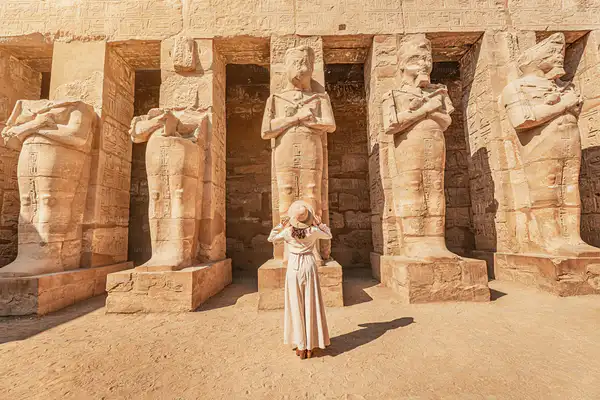
Thutmose III's Annals at Karnak remain the earliest example of systematic military record-keeping, the first reliable account of a pitched battle, and the origin of a word — Armageddon — that has defined the Western imagination of apocalypse for two thousand years. The pharaoh who carved his victories into the temple walls could not have imagined that his battle records would outlast not only his empire but his entire civilization, still read and studied three and a half millennia later by soldiers, scholars, and seekers of prophecy alike.