
On January 13, 1833, fire tore through Rila Monastery with catastrophic fury. The residential quarters, the main church, the library with irreplaceable medieval manuscripts, centuries of accumulated icons and artworks — nearly everything was consumed. The monks barely escaped with their lives.
Only Hrelyo's Tower survived, its stone walls standing defiant among the ashes — the oldest structure proving the most resilient. The monastery that had been Bulgaria's spiritual center for nine centuries was reduced to ruins.
But the destruction ignited something unexpected: a national awakening. Bulgaria was under Ottoman rule, its people without a state. Rila Monastery was more than a religious site — it was the repository of Bulgarian language, manuscripts, education, and identity. Its destruction was an assault on the nation's soul.
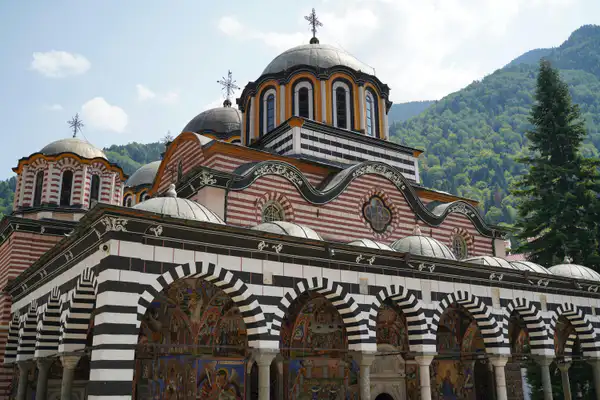
Donations poured in from Bulgarian communities across the Ottoman Empire. Wealthy merchants, guilds, and ordinary peasants contributed money, materials, and labor. Master builder Alexi Rilets designed the new complex in the distinctive style visible today — striped arches, broad wooden galleries, fortress-like exterior walls enclosing a spacious courtyard.
The great painters Zahari and Dimitar Zograph covered the new church walls with vivid frescoes — heaven and hell, saints and sinners — that became masterpieces of Bulgarian Revival art. The rebuilt monastery was deliberately grander than the original. Where fire had destroyed, a nation's will created something greater.
The rebuilding of Rila became one of the defining acts of the Bulgarian National Revival — proof that when a people rally around their sacred places, even catastrophe becomes the catalyst for rebirth.