
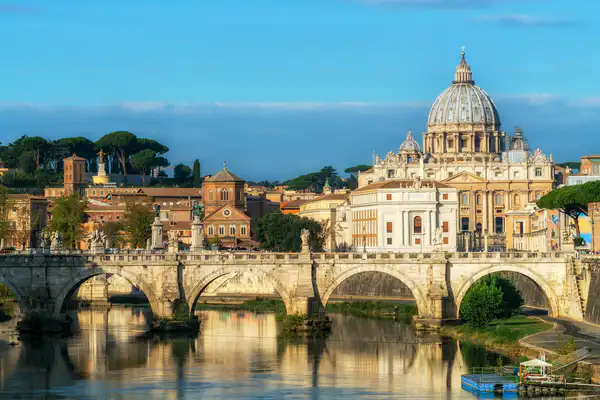
In 1939, Vatican workers digging beneath St. Peter's Basilica — the biggest church in the world — broke through the marble floor while making room for a new papal tomb. The ground gave way, and they dropped into pitch darkness. When the dust settled, they were standing in something that hadn't seen daylight in sixteen hundred years — and they'd just stumbled onto a secret that could prove or shatter the very reason this church was built.
They'd fallen into a buried city of the dead — a Roman cemetery sealed since around 320 AD. Emperor Constantine, the first Roman ruler to embrace Christianity, had ordered the entire graveyard filled with dirt and flattened, burying the tombs of Roman nobles and former slaves alike — all so he could build his church on top of the one grave he believed mattered more than any other.
Pope Pius XII — the man who'd guided the Church through World War II — quietly authorized a secret dig. For ten years, a small team of archaeologists crawled through narrow tunnels beneath the basilica, uncovering one tomb after another: ancient paintings, mosaics, Latin inscriptions dating back to the first century. The tombs lined an old Roman road older than Christianity itself.
As they dug westward — toward the spot directly beneath the high altar — the tombs got simpler, poorer, older. They were moving into a stretch of Vatican Hill once used to bury common people and executed criminals. Exactly the kind of place where a crucified fisherman from a small town in Galilee would have ended up.
Right beneath the papal altar, they found something remarkable: a small stone shrine built around 160 AD. It matched a written account from a Roman priest named Gaius, who around 200 AD wrote that he could show visitors the “trophy” of the apostle Peter on Vatican Hill. The shrine sat against a plastered wall covered in scratched Christian prayers. And one message cut through the centuries: “Petros eni.” Peter is within.
Behind that wall, tucked inside a marble-lined space, they found human bones wrapped in purple cloth woven with gold thread — fabric reserved for royalty or the highest sacred honor. An anatomist determined they belonged to a powerfully built man who died between sixty and seventy. The profile was a striking match for the apostle Peter.
But the discovery sparked a fierce debate. The lead archaeologist, Antonio Ferrua, had found a different set of bones in the soil directly beneath the shrine — and he was convinced those were the real relics. It was Margherita Guarducci, a specialist in ancient inscriptions, who championed the bones from behind the wall. She traced their history through Vatican records and argued they'd been quietly moved for safekeeping during earlier construction.
In 1968, Pope Paul VI addressed the world with carefully measured words: “The relics of St. Peter have been identified in a manner which we believe convincing.” He stopped just short of making it official Church teaching — to this day, no Catholic is required to believe those bones belong to Peter.
Whether those bones truly belong to the fisherman from Galilee who walked with Jesus may never be proven. But here’s what can’t be argued: from a simple first-century grave to a second-century shrine to Constantine’s basilica to the Renaissance masterpiece that stands today — two thousand years of devotion, all pointing to the same few square meters of Roman soil. That’s not just faith. That’s a pin on the map that hasn’t moved in two millennia.