
In 1916, a British army chaplain named David Railton walked through a graveyard behind the front lines in Armentières, France. World War I was in its second year, and the dead were everywhere. One grave stopped him cold. The cross read: "An Unknown British Soldier." No name. No rank. No hometown. Just a man who gave everything and vanished into the mud. That image burned into Railton's mind. It would change how a nation remembers its dead.
When the war ended in 1918, the numbers were staggering. Nearly a million British soldiers were dead. Hundreds of thousands more had vanished — blown apart by shells, swallowed by trench mud, lost without a trace. Families had no body to bury, no grave to visit. So Railton wrote to the Dean of Westminster Abbey with a bold idea: bring one unidentified soldier home and bury him with the highest honors the nation could give — among the kings.
On the night of November 7, 1920, six unidentified British bodies were quietly dug up from the battlefields of France and Belgium. Each was placed in an identical sack and brought to a chapel in St Pol. At midnight, Brigadier General Wyatt walked in alone. He pointed at one. That was it. The other five were reburied with honors. From that moment, nobody could ever know who the chosen man was — and that was the whole point.
The body was placed in a coffin of oak from Hampton Court Palace — royal wood for a man with no name. On the lid they laid a crusader's sword from the Tower of London. A weapon from the age of knights, resting on the chest of a soldier from the age of machine guns. An iron shield read: "A British Warrior who fell in the Great War 1914–1918 for King and Country." The coffin was sealed forever. His name, his age, the battle that killed him — locked away for good.
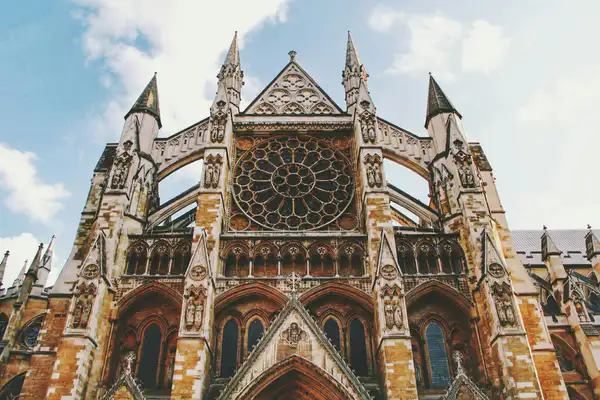
On November 11, 1920 — two years to the day since the guns went silent — the coffin rode through London on a gun carriage pulled by six black horses. King George V walked behind it. Hundreds of thousands lined the streets in silence, many weeping, some clutching photos of their own missing sons. At Westminster Abbey, Victoria Cross holders — soldiers with Britain's highest award for bravery — carried the coffin through the Great West Door.
The King scattered French soil into the open grave. It was filled with a hundred sandbags of earth from the battlefields of France and Belgium — so the Unknown Warrior would rest in the very ground he died defending. A slab of black Belgian marble was set into the floor, bearing words now famous across the English-speaking world: "They buried him among the kings because he had done good toward God and toward his house."
That grave became the most sacred spot in Britain. It is the only grave in the Abbey no one may walk on — not tourists, not priests, not even the King. In 1923, when Lady Elizabeth Bowes-Lyon married the future King George VI, she laid her wedding bouquet on it for her brother, killed in the trenches. Royal brides at the Abbey have done the same ever since. The United States gave him their Medal of Honor, making a man with no name one of the most honored soldiers in history.
Westminster Abbey holds the graves of kings, queens, scientists, and poets — centuries of Britain's greatest names. But the most honored spot in the building belongs to someone whose name nobody will ever know. He could have been a factory worker, a schoolteacher, a farmer's son. That is exactly the point. He is not honored for who he was. He is honored for everyone he represents — every life cut short, every name lost to the mud, every family that never got to say goodbye.