
En 1916, un aumônier britannique du nom de David Railton traverse un cimetière de fortune près d'Armentières. La guerre dure depuis deux ans. Les morts s'entassent. Une croix l'arrête net. Elle dit simplement : « Un soldat britannique inconnu. » Pas de nom. Pas de grade. Pas de village natal. Juste un homme effacé par la boue. Nous, en France, on connaît ce vertige — notre Soldat inconnu repose sous l'Arc de Triomphe. Mais cette histoire-là est celle des Britanniques. Et elle commence ici, dans la boue du Nord.
Quand le silence revient en 1918, le bilan est monstrueux. Près d'un million de soldats britanniques sont morts. Des centaines de milliers ont disparu — pulvérisés par les obus, avalés par la terre des tranchées. Des familles entières n'ont ni corps à pleurer, ni tombe à fleurir. Alors Railton écrit au doyen de l'abbaye de Westminster avec une idée folle : ramener un seul soldat non identifié et lui offrir des funérailles dignes d'un roi. Littéralement — l'enterrer parmi les rois.
Le 7 novembre 1920, à la nuit tombée, six corps de soldats inconnus sont exhumés des champs de bataille de France et de Belgique. Six sacs identiques, alignés dans une chapelle de Saint-Pol-sur-Ternoise. À minuit, le général Wyatt entre seul. Il désigne un corps. C'est tout. Les cinq autres sont réinhumés avec les honneurs. À partir de cet instant, personne ne pourra jamais savoir qui est cet homme. Et c'est précisément le but.
Le cercueil est taillé dans du chêne de Hampton Court — du bois royal pour un homme sans nom. Sur le couvercle, on dépose une épée de croisé venue de la Tour de Londres. Une arme du temps des chevaliers, posée sur la poitrine d'un soldat de l'ère des mitrailleuses. Un bouclier de fer porte ces mots : « Un guerrier britannique tombé lors de la Grande Guerre, pour le Roi et la Patrie. » Puis le cercueil est scellé. Pour toujours. Son nom, son âge, la bataille qui l'a tué — enfermés à jamais.
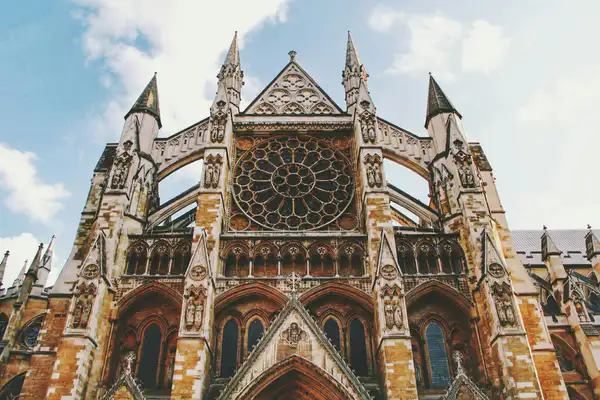
Le 11 novembre 1920, deux ans jour pour jour après l'armistice, le cercueil traverse Londres sur un affût de canon tiré par six chevaux noirs. Le roi George V marche derrière. Des centaines de milliers de personnes bordent les rues en silence. Beaucoup pleurent. Certains serrent contre eux la photo d'un fils disparu. À Westminster, des titulaires de la Victoria Cross — la plus haute distinction militaire britannique — portent le cercueil à travers la grande porte ouest.
Le roi jette de la terre française dans la fosse ouverte. Cent sacs de sable remplis de terre des champs de bataille de France et de Belgique comblent la tombe. Le Guerrier inconnu reposera dans le sol même qu'il est mort en défendant. Une dalle de marbre noir de Belgique est posée, gravée de mots devenus célèbres : « On l'a enterré parmi les rois, car il avait bien agi envers Dieu et envers sa maison. »
Cette tombe est devenue le lieu le plus sacré de Grande-Bretagne. C'est la seule dans l'abbaye sur laquelle personne n'a le droit de marcher — ni les touristes, ni les prêtres, ni même le roi. En 1923, Lady Elizabeth Bowes-Lyon y a déposé son bouquet de mariée en mémoire de son frère, tué dans les tranchées. Depuis, chaque mariée royale fait pareil. Les États-Unis lui ont décerné leur Medal of Honor. Un homme sans nom est devenu l'un des soldats les plus décorés de l'histoire.
Westminster abrite les tombes de rois, de reines, de savants et de poètes — des siècles de gloire britannique gravés dans la pierre. Mais l'endroit le plus honoré de tout l'édifice appartient à quelqu'un dont personne ne connaîtra jamais le nom. Il était peut-être ouvrier, instituteur, fils de fermier. C'est exactement le but. On dit que les petits ruisseaux font les grandes rivières — ici, c'est l'inverse. Un fleuve entier de deuil, condensé dans un seul homme. Il n'est pas honoré pour ce qu'il était. Il l'est pour tous ceux qu'il représente.