
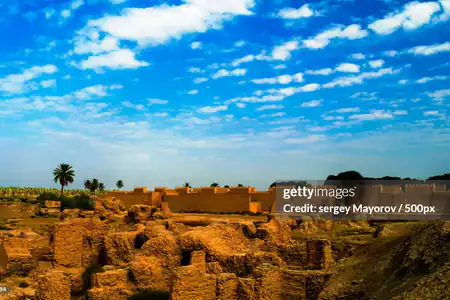
想象一下,全世界所有人说同一种语言。《创世记》第十一章就是这么开头的。大洪水之后,诺亚的后代一路迁徙,来到了今天伊拉克南部的一片大平原——幼发拉底河和底格里斯河之间的土地。这里没有石头,没有木材,只有泥。于是他们把河泥捏成砖,用火烧硬,再用天然沥青粘起来——那种沥青,到今天还能从伊拉克的地面上冒出来。然后,他们说了一句改变一切的话:“来,我们造一座塔,塔顶要通天。”
最离谱的是——这座塔真的存在过。它叫以特门安基,苏美尔语的意思是“天地根基之庙”。它就矗立在巴比伦城的正中心。1899年,德国考古学家科尔德维把它从土里挖了出来,发现了和圣经描述几乎一模一样的东西:一个巨大的方形底座,每边91米,用窑烧砖和沥青砌成。这座塔反复重建了好几个世纪,到公元前600年左右,尼布甲尼撒二世把它推到了巅峰。他自己在石碑上刻了一句话:“我举其顶,与天争高。”
七层。最高处铺着蓝色琉璃砖,太阳一照,像是天空掉了一角下来。顶上是供奉主神马尔杜克的神殿。总高约91米——自由女神像的高度。放在一马平川的平原上,50公里外都能看见它。这就是一座人造的山,建在一个根本没有山的国家。公元前460年左右,希腊历史学家希罗多德亲眼见过,说塔顶每夜有一位女祭司独自守候,等着神降临。连见过世面的希腊人都看呆了。
“巴别”这个名字,本身就是一场跨越千年的嘲讽。巴比伦人管自己的城市叫“巴比利”——意思是“神之门”。但写圣经的希伯来人换了个读法,把它跟“巴拉尔”挂了钩——意思是“搅乱”。神之门就这么变成了混乱之地。更绝的是,这故事甚至不是希伯来人的原创。公元前2100年,一首苏美尔诗歌——比《创世记》早了整整一千年——就已经讲了同一件事:曾经人类说同一种话,后来众神把它给搅了。语言的混乱,是两河流域的古老记忆。《圣经》只是把它重新讲了一遍。
我们甚至有建造者本人的肖像。2011年,亚述学家安德鲁·乔治公布了一块尼布甲尼撒时代的黑色石碑。上面刻着这位国王站在他的塔旁边,手握建造者之杖,脸微微仰着,望向塔顶。这是人类迄今发现的唯一一幅完成后的通天塔图像。尼布甲尼撒——那个时代地球上最有权势的人——仰望自己一手建起的东西。他脸上的表情,只能用一个词形容:石化了的骄傲。
塔不是被上帝击倒的。击倒它的是一个更平凡的力量:时间。公元前331年,亚历山大大帝碾碎波斯帝国之后进入巴比伦,通天塔已经在坍塌了——波斯人让它荒了两百年。亚历山大下令派一万名士兵去清废墟。干了两个月,几乎没动。然后,公元前323年,亚历山大在尼布甲尼撒的王宫里发了一场高烧,死了。三十二岁。从此再没有人试过。
《三国演义》开头就说:天下大势,合久必分。但通天塔的故事讲了一个更狠的版本——不是合久了自然会分,是有人根本不许你合。全人类说同一种话,建同一座塔,怀同一个梦。而恰恰是这份齐心,把上帝吓到了。
今天,巴格达以南85公里的地方,只剩下一个灌满了水的方形坑——古代世界最伟大的塔,曾经就站在这里。2019年,联合国教科文组织把它列为了世界遗产。但通天塔真正的纪念碑不在伊拉克。它在地球上每一种被说出口的语言里。首尔的孩子和圣保罗的孩子可以看着同一场日落,却找不到一个共同的词来描述它。砖早碎了。沥青风化了好几个世纪。但那场混乱?永远。