
About
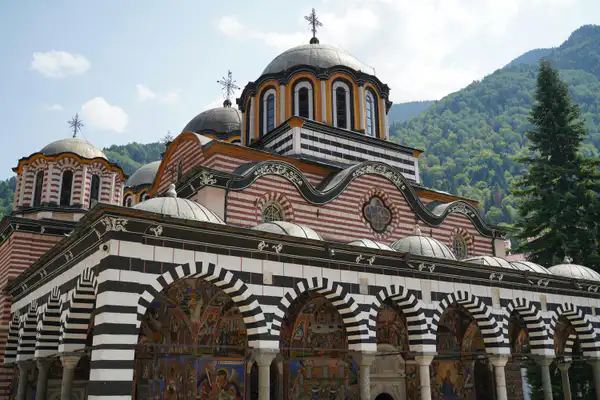
s most precious treasure is the gilded wood-carved iconostasis, created over five years by four master craftsmen. At 10 meters high and 12 meters wide, it is one of the largest in the Orthodox world, featuring intricate carvings of angels, biblical scenes, and botanical motifs covered in gold leaf. The surviving Hrelyo Tower from 1335 stands as a reminder of the monastery's medieval fortifications. This 23-meter defensive tower once protected monks and treasures during bandit attacks, and today offers visitors views across the monastery complex. Throughout five centuries of Ottoman rule (1396-1878), Rila Monastery remained a bastion of Bulgarian culture, language, and Orthodox faith. Monks secretly educated children in Bulgarian when it was forbidden, copied manuscripts, and preserved the national identity. In 1983, UNESCO recognized its exceptional universal value as a World Heritage Site. The monastery still functions as an active religious community, with monks maintaining the ancient traditions of prayer, chanting, and hospitality that have continued unbroken for over 1,000 years. The relics of Saint Ivan of Rila, returned to the monastery in 1469 after centuries of journeys through Sofia, Hungary, and Veliko Tarnovo, remain the most sacred treasure of Bulgaria.
Historical Significance
“...s liberation in 1878. The architectural and artistic significance is equally profound. The post-1833 reconstruction represents the pinnacle of Bulgarian National Revival architecture, combining traditional Orthodox monastery layout with vibrant color, innovative design, and master craftsmanship. The frescoes by Zahari Zograf are considered masterpieces of 19th-century Orthodox art. UNESCO inscribed Rila Monastery as a World Heritage Site in 1983, recognizing it as "a masterpiece of human creative genius" and "an outstanding example of a type of building which illustrates a significant stage in Bulgarian history."”
故事
2History
👑 Built by
Saint Ivan of Rila (founder); Hrelyo Dragovol (14th century rebuilder); Alexi Rilets (19th century architect)
930s AD - Saint Ivan of Rila establishes hermitage in the mountains; followers gather and form first monastery
946 AD - Death of Saint Ivan of Rila; his relics begin to work miracles
969-972 AD - Relics transferred to Sofia (then Sredets) by Tsar Peter I
1183 AD - Hungarian king takes relics to Esztergom during military raids
1187 AD - King Bella III returns relics to Sofia
1194-1195 AD - Relics moved to capital Veliko Tarnovo
1334-1335 AD - Hrelyo Dragovol builds the defensive tower that survives today
1343 AD - Small church next to Hrelyo Tower completed
1469 AD - Sultana Mara Branković helps return relics to Rila Monastery
1833 AD - Devastating fire destroys most wooden buildings
1834-1862 AD - Complete reconstruction in Bulgarian National Revival style
1844-1846 AD - Zahari Zograf and team complete the famous frescoes
1983 AD - Inscribed as UNESCO World Heritage Site