
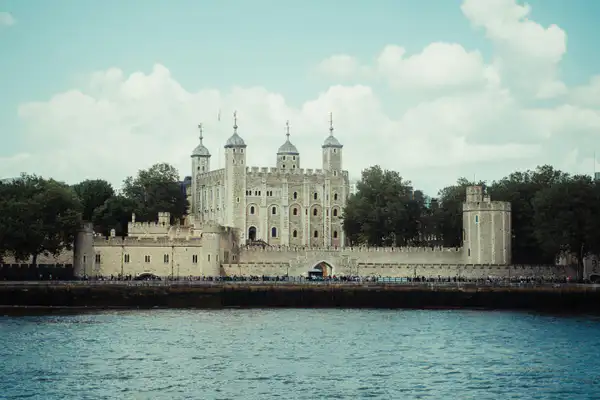
About
The Tower of London, officially Her Majesty's Royal Palace and Fortress of the Tower of London, is one of the most iconic and historically significant fortifications in the world. Founded by William the Conqueror in 1066 following his victory at the Battle of Hastings, the Tower began as a symbol of Norman dominance over the conquered Anglo-Saxon population. The original structure, the White Tower, was constructed from Caen stone imported from Normandy and stood as the tallest building in London for centuries — a deliberate architectural statement of absolute power that could be seen for miles along the Thames. Over nearly a millennium of continuous use, the Tower has served an extraordinary range of functions that mirror the turbulent history of England itself. It has been a royal residence where monarchs held court in splendor, a formidable military fortress that withstood sieges and civil wars, a state prison where the most dangerous and illustrious figures in English history were confined, and a place of execution where queens, nobles, and traitors met their end on Tower Green. It has housed the Royal Mint, which produced England's coinage for over 500 years, the Royal Menagerie — an exotic zoo that included lions, elephants, and polar bears — the Public Records Office, and the Royal Observatory before it moved to Greenwich. Today, the Tower of London stands as a UNESCO World Heritage Site and one of Britain's most visited attractions, drawing over three million visitors annually. The Crown Jewels of the United Kingdom — one of the most valuable and historically significant collections of regalia in the world — are permanently housed in the Jewel House within the Tower's walls. The Yeoman Warders, colloquially known as Beefeaters, serve as ceremonial guardians and tour guides, continuing a tradition that dates back to the Tudor period. The Tower's ravens, protected by royal decree, are perhaps its most beloved inhabitants, embodying an ancient superstition that ties their presence to the survival of the Crown and the kingdom itself. From the Norman Conquest to the present day, the Tower of London has been an unbroken thread in the fabric of English history, witnessing coronations and conspiracies, triumphs and tragedies, serving as both the seat of power and the instrument of its cruelest expressions.
Historical Significance
“The Tower of London occupies a unique place in English and world history as a fortress that has been in continuous use for nearly a thousand years. Its construction by William the Conqueror in 1066 marked the beginning of Norman rule in England, and the White Tower — the original keep — became the architectural template for castle construction throughout the realm. The Tower was both a statement of royal authority and a practical military stronghold controlling access to London via the Thames. As a state prison, the Tower held some of the most famous figures in English history. Sir Thomas More, Sir Walter Raleigh, Guy Fawkes, Anne Boleyn, Catherine Howard, Lady Jane Grey, and Rudolf Hess during World War II all passed through its gates. The phrase "sent to the Tower" became synonymous with disgrace and impending doom. Seven people were executed within the Tower walls on Tower Green — all of noble birth, granted the relative privacy of a death away from the baying public crowds at Tower Hill. The Tower's role as guardian of the Crown Jewels dates back to 1303, when the jewels were moved from Westminster Abbey after a notorious theft. Today, the collection includes the Imperial State Crown, set with 2,868 diamonds including the legendary Cullinan II, and the Sovereign's Orb and Sceptre. The collection is valued as priceless — no insurance company in the world will underwrite it. The Tower remains a working royal palace and fortress, the oldest continuously occupied fortified building in Europe, and a living monument to the extraordinary sweep of English history.”
القصص
4History
👑 Built by
William the Conqueror (William I)
1066 - William the Conqueror begins construction of the Tower following his coronation on Christmas Day
1078 - Construction of the White Tower begins under the direction of Gundulf, Bishop of Rochester
1100 - Ranulf Flambard, Bishop of Durham, becomes the first recorded prisoner — and the first to escape, climbing down a rope smuggled in a wine cask
1210 - King John uses the Tower to imprison Jewish financiers, extracting money by pulling out their teeth
1235 - Holy Roman Emperor Frederick II gifts three leopards to Henry III, establishing the Royal Menagerie
1252 - Henry III receives a polar bear from the King of Norway; it was kept on a long chain and allowed to fish in the Thames
1303 - Crown Jewels moved to the Tower after a theft from Westminster Abbey
1381 - Peasants' Revolt: rebels storm the Tower and execute the Archbishop of Canterbury Simon Sudbury
1483 - The Princes in the Tower — Edward V and his brother Richard — disappear while lodged in the Tower by Richard III
1536 - Anne Boleyn, second wife of Henry VIII, is beheaded on Tower Green on May 19
1605 - Guy Fawkes is imprisoned and interrogated in the Tower following the Gunpowder Plot
1671 - Colonel Thomas Blood attempts to steal the Crown Jewels in the most audacious heist in English history
1941 - Rudolf Hess, Hitler's deputy, is briefly held at the Tower after his bizarre solo flight to Scotland
1988 - UNESCO designates the Tower of London as a World Heritage Site