
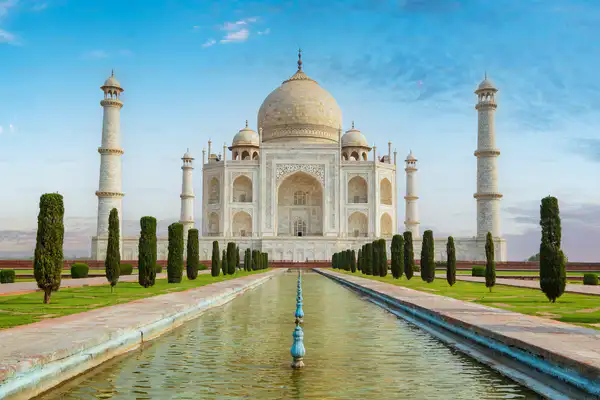
في مدينة أَغْرا الهنديّة، في ظلّ تاج مَحَل، تُروى حكايةٌ يعرفها كلُّ من وقف أمام ذلك الصَّرح الأبيض. يُقال إنّ الإمبراطور شاه جَهان حين اكتمل بناء ضريح زوجته عام ١٦٥٣، أمر بقطع أيدي عشرين ألف عامل — حتّى لا يبنيَ أحدٌ منهم شيئاً بهذا الجمال مرّةً أخرى. بعض الروايات تُضيف أنّه سَمَل أعينهم أيضاً. أسطورةٌ مشهورة. ومكذوبةٌ من أوّلها إلى آخرها.
والطريف أنّها ليست حتّى كِذبةً أصليّة. نفس الحكاية تُروى عن كاتدرائيّة القدّيس باسيل في موسكو — أنّ إيفان الرهيب أعمى المعماريّين. وتُروى عن جامع الفاتح في إسطنبول — أنّ السلطان محمّد قطع يد المهندس. يقول المَثَل "الكَذِبُ حَبْلُهُ قصير"، لكنّ هذه الكِذبة بالذات حبلُها طويلٌ جدّاً — امتدّ عبر قارّاتٍ وقرون، لأنّ الناس يُحبّون أن يُصدّقوا أنّ الجمال المستحيل لا بدّ أن يكون ثمنه فادحاً.
لكنّ المغول كانوا مَهووسين بالتوثيق. كتاب «بادشاهنامَه» — السجلّ الرسمي لبلاط شاه جَهان — يمتدّ مئات الصفحات، يُسجّل كلَّ أَجْرٍ وكلَّ عَقْد مَحاجر وكلَّ شحنة رخام. لا يذكر عقوبةً واحدة. ولا سطراً واحداً. قطعُ أربعين ألف يدٍ عن عشرين ألف عامل كان سيكون كارثةً إداريّة — خسارة مفاجئة لأمهر حِرَفيّي آسيا. إمبراطوريّة وثّقت كلّ شيء لم توثّق هذا. لأنّه ببساطة لم يحدث.
بل فعل شاه جَهان العكسَ تماماً. في عام ١٦٤١، وسطَ البناء، حظر السُّخرة في أنحاء إمبراطوريّته. نقشٌ في قلعة أَغْرا يسجّل إنفاق أحدَ عشرَ مليون دام من الخزينة الملكيّة أُجوراً للعمّال. والأجمل: عثر علماء الآثار على نحو ٦٧٠ اسماً محفوراً في حجر تاج مَحَل الرملي — بالعربيّة والفارسيّة، بجانب رموز هندوسيّة وإسلاميّة معاً. لم تكن خدوش سجناء. كانت تواقيعَ فخر.
المعماري الأوّل، أُستاذ أحمد اللّاهوري — عالم رياضيّات درس إقليدس ولُقِّبَ بـ"أُعجوبة العصر" — لم يختفِ بعد تاج مَحَل. انتقل مباشرةً إلى مشروعه التالي: تصميم القلعة الحمراء في دلهي، عاصمة شاه جَهان الجديدة. توفّي بأسباب طبيعيّة نحو عام ١٦٤٩، ويداه سالمتان. وبنى ابنه لاحقاً نسخةً مقصودة من تاج مَحَل بتكليفٍ من الإمبراطور أَوْرَنْكزيب نفسه. لم يكن هناك حظرٌ على التكرار قطّ.
ثمّ هناك الخطّاط عبد الحقّ، الذي جاء من إيران ليخطّ آيات القرآن على كلّ قوس. صمّم الحروف بحيث تكبُر كلّما ارتفعت على الجدار، حتّى تبدوَ متساوية من الأرض — خدعةٌ بصريّة ما زالت تعمل بعد أربعة قرون. منحه شاه جَهان لقب "أمانت خان" وأراضيَ وثروةً مدى الحياة. الشخص الوحيد الذي وقّع تاج مَحَل باسمه مات ثريّاً — وبنى بأرباحه داراً لإيواء المسافرين.
فلماذا تعيش الأسطورة؟ جزئيّاً لأنّ حكايات المستعمرين البريطانيّين عن "الطغاة الشرقيّين القساة" ساعدت في تبرير احتلال الهند. لكنّ السبب الأعمق: حين تقف أمام تاج مَحَل والرخام يملأ بصرك والزهور المنحوتة تبدو كأنّك تستطيع قطفها — يحتاج عقلُك إلى تفسيرٍ يوازي هذا الجمال. أربعون ألف يدٍ مقطوعة، بفظاعتها، إجابةٌ كبيرة بما يكفي لسؤالٍ كبير.
لكنّ الحقيقة أجمل. عشرون ألف عامل من أديان مختلفة، بقيادة معماريّ عبقري، يتقاضون أُجورهم من الخزينة، بنوا اثنتين وعشرين سنة تحت إمبراطور حظر السُّخرة. حفروا أسماءهم في الجدران. علّموا أبناءهم، فبنى أولئك الأبناء لأباطرة لم يُولَدوا بعد. الأيدي التي بنت تاج مَحَل لم تُقطَع قطّ. لم يكن الجمال لعنة. كان هِبَةً — قُدِّمت بحرّيّة.