
About
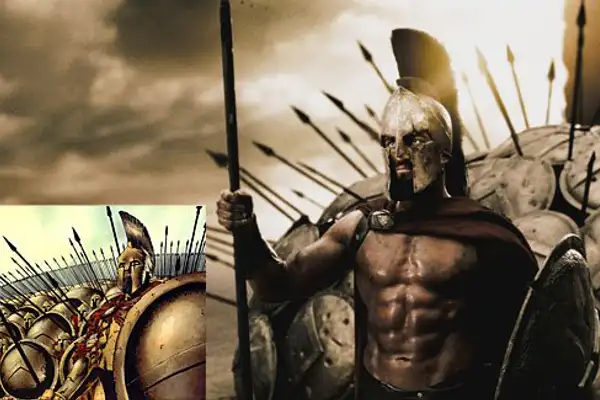
Thermopylae — the "Hot Gates" — is a narrow coastal pass in central Greece where, in August 480 BCE, one of history's most celebrated acts of courage and sacrifice took place. Here, King Leonidas of Sparta and a small force of Greek warriors held back the vast Persian army of King Xerxes for three days, buying the time that would ultimately save Greek civilization. The pass takes its name from the hot sulfur springs that still bubble from the ground nearby. In antiquity, the pass was far narrower than today — barely wide enough for a single wagon between the mountains and the sea. This natural bottleneck negated the Persians' overwhelming numerical superiority, forcing Xerxes' army to fight in a narrow front where quality of arms and training, not numbers, determined the outcome. The 300 Spartans who formed the core of the Greek defense have become the most famous warriors in history. Raised from birth in the agoge — Sparta's brutal military training system — they were the finest soldiers the ancient world had ever produced. They fought alongside 700 Thespians, 400 Thebans, and other Greek allies, but it is the Spartans whose sacrifice has echoed through the millennia. The battle ended when a local Greek named Ephialtes, seeking reward from Xerxes, revealed a hidden mountain path that allowed the Persians to encircle the defenders. When Leonidas learned of the betrayal, he dismissed most of the Greek army but remained with his Spartans, the Thespians who refused to leave, and the Thebans. They fought to the last man, their sacrifice buying critical days for the Greek fleet and army to regroup. Today, the battlefield has changed dramatically — centuries of silt deposits have pushed the coastline far from the original pass. But the monument to Leonidas still stands, bearing the epitaph composed by the poet Simonides: "Go tell the Spartans, stranger passing by, that here obedient to their laws we lie."
Historical Significance
“The Battle of Thermopylae is the supreme example of courage against overwhelming odds in Western civilization. Though a tactical defeat, it was a strategic victory: the delay allowed the Greek fleet to fight at Artemisium and then regroup at Salamis, where Themistocles destroyed the Persian navy. Without Thermopylae, there would have been no Salamis; without Salamis, Greece would have fallen. The battle established the Spartans as the foremost warriors of the ancient world and created the archetype of the "last stand" that has inspired military culture ever since — from the Roman Horatius at the bridge to the Alamo, from Rorke's Drift to the siege of Bastogne. The phrase "Molon Labe" ("Come and take them"), Leonidas's response when Xerxes demanded the Greeks surrender their weapons, remains a rallying cry to this day. The epitaph written by Simonides became the most famous commemorative inscription in history. Its message — that the Spartans died in obedience to their laws — elevated their sacrifice from military action to civic virtue. They died not for glory but for duty, not for personal honor but for the law of Sparta that commanded them never to retreat. The site has been fought over repeatedly throughout history. The Gauls passed through in 279 BCE. The Romans fought Antiochus III here in 191 BCE. Justinian fortified the pass in the 6th century CE. German forces broke through in 1941, during WWII. Each time, the ghost of Leonidas seemed to watch from the surrounding hills.”
Geschichten
3History
👑 Built by
Natural pass; battle memorials erected by various Greek states
480 BCE, August - King Leonidas arrives with approximately 7,000 Greek warriors
480 BCE, Day 1 - Xerxes sends Medes and Cissians; all repulsed with heavy losses
480 BCE, Day 2 - Xerxes sends the Immortals (elite Persian guard); Spartans defeat them
480 BCE, Night - Ephialtes reveals the Anopaea mountain path to Xerxes
480 BCE, Day 3 - Leonidas dismisses most allies; fights to the death with 300 Spartans and 700 Thespians
480 BCE - Simonides composes the famous epitaph for the fallen
480 BCE, September - Greeks defeat Persian fleet at Salamis
479 BCE - Greeks defeat remaining Persian army at Plataea
279 BCE - Gauls break through Thermopylae, march on Delphi
191 BCE - Romans defeat Seleucid King Antiochus III at Thermopylae
1941 CE - ANZAC forces make a stand at Thermopylae against German advance
1955 - Modern monument to Leonidas erected at the battlefield