
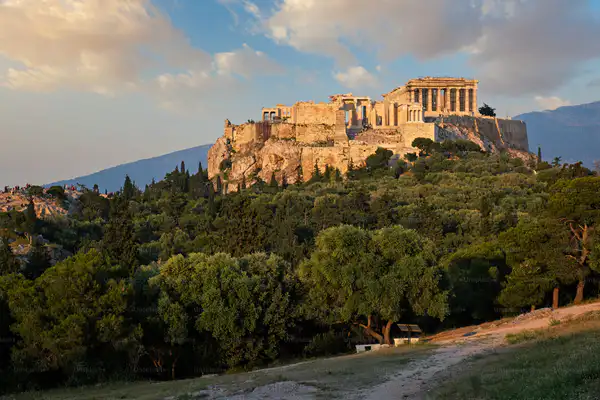
The year is 508 BCE. Athens is about to give the world its most dangerous idea — that ordinary people should rule themselves. But here’s the thing: democracy wasn’t dreamed up in some quiet meeting hall. It was born on a rocky hilltop in the middle of a siege, when common citizens stood up to the most feared soldiers in the ancient world.
For decades, Athens had been run by tyrants — strongmen who ruled by force, not by vote. When the last one, Hippias, was finally thrown out in 510 BCE, a power vacuum ripped the city apart. Two men stepped forward: Isagoras, a wealthy elite who wanted power to stay with the rich, and Cleisthenes, a nobleman who made a radical bet. He turned to the common people — the potters, the farmers, the fishermen — and offered them something unheard of: a real voice in how their city was run.
Isagoras wasn’t going to let that happen. He called in a favor from Sparta — the most powerful military state in Greece — and King Cleomenes marched into Athens with a garrison of soldiers. Together, they dissolved Athens’ governing council, exiled Cleisthenes along with 700 families who supported him, and seized the Acropolis — the sacred hilltop at the heart of the city, crowned by the temple of Athena, the city’s patron goddess. The message was clear: sit down and obey.
The people of Athens did the exact opposite. In a moment that still stuns historians, the ordinary citizens — with no leader, no plan, and no military backing — surrounded the Acropolis and trapped the Spartan garrison on top of it. Think about that. Regular people — no general, no battle plan — holding the line against the finest warriors in Greece. They kept it up for two days. On the third day, the Spartans surrendered and walked out of the city. Isagoras fled with them, never to return.
Cleisthenes came back to a different city. The people had tasted their own power, and they weren’t giving it back. So he gave them a government to match: a council of 500 citizens chosen by lottery — not by wealth or family name — and an open assembly where every citizen could stand up, speak, and vote. The Greeks had a word for it: “demokratia” — literally, “people-power.” For the first time anywhere on earth, the many would rule — not the few.
In the decades that followed, the Acropolis itself became proof of what democracy could build. The temples that rose on that hilltop — including the Parthenon, still standing today — were approved by popular vote and paid for with public funds. No king ordered them built. No tyrant stamped his name on them. They were raised by a free city for itself. Every column you see up there is a monument not to a ruler, but to the idea that regular people, given real power, will build extraordinary things.
Democracy didn’t begin with a speech or a signed document. It began with everyday people who looked up at a hilltop held by soldiers and tyrants and said: that’s ours. Twenty-five centuries later, we’re still debating what they started. But one thing is clear — the idea that people should govern themselves didn’t come from the powerful. It was taken by the powerless, on a sacred rock in Athens, in three days that changed the world.