
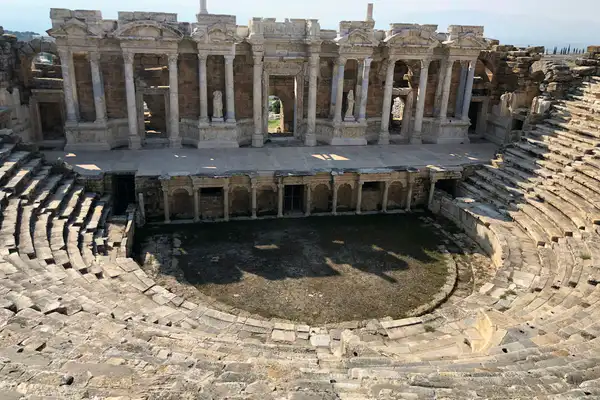
In the summer of 431 AD, over two hundred bishops flooded into the ancient city of Ephesus — not to pray, but to fight. The Roman emperor had called a massive church council to settle a question that was ripping the Christian world apart: Was Mary simply the mother of a man who happened to be divine, or was she something far bigger — the Mother of God herself? The answer would shape what billions of people believed for the next sixteen hundred years.
On one side: Nestorius, Patriarch of Constantinople — the most powerful church leader in the eastern Roman Empire. His take: Mary gave birth to Christ’s human nature only. Facing him was Cyril, Patriarch of Alexandria in Egypt, who wouldn’t budge — Mary carried God in the flesh, end of story. But this was never just about theology. Constantinople and Alexandria had been at each other’s throats for decades over who ran eastern Christianity. The doctrine fight was just the latest battlefield.
Cyril arrived in Ephesus first — and he didn’t wait. The Syrian bishops backing Nestorius were still traveling when Cyril opened the council without them. In a single day, he put Nestorius on trial, condemned his teachings, and stripped him of his title. It was done before the other side even walked through the city gates. When the Syrians finally showed up, they were furious. They held their own rival council and excommunicated Cyril right back.
What followed was weeks of total chaos. Two groups of bishops roamed the streets of Ephesus, each calling the other side heretics and frauds. Monks from both camps brawled in public. Emperor Theodosius II — the man who called this whole council to bring unity — got so fed up he threw both Cyril and Nestorius in prison. A meeting meant to heal the church had turned into the most spectacular religious meltdown the Roman Empire had ever seen.
But Cyril knew how to play the long game. From behind bars, he launched a lobbying campaign that would make a modern politician blush: crates of gold, ivory, and fine silk quietly shipped to key officials at the imperial court. The bribes worked. The emperor released Cyril, upheld his verdict, and banished Nestorius to a remote desert in Egypt — where he spent his remaining years writing letters that nobody ever answered.
The council’s ruling — that Mary is Theotokos, the Mother of God — became one of the defining doctrines of Christianity. Nearly sixteen hundred years later, it still sits at the heart of Catholic and Orthodox belief. And it all came down to a rigged vote, a backroom deal, and one bishop who understood something most people still don’t: the winners don’t just write history — they write the theology too.