
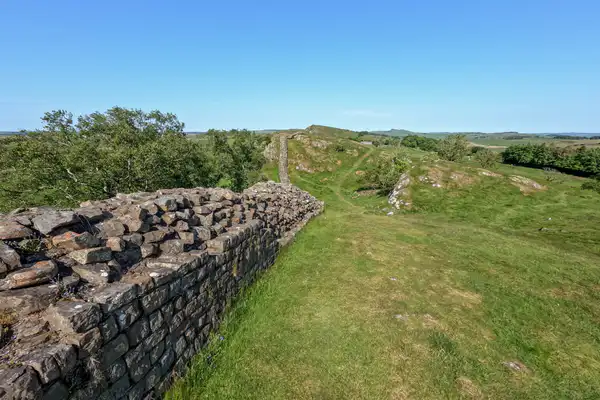
Spring, 1973. A British archaeologist named Robin Birley was digging through black, waterlogged mud at Vindolanda — a Roman military fort just south of Hadrian’s Wall in northern England. He spotted thin slivers of wood in the muck and figured they were scrap from a carpenter’s shop. Then he held one up to the light. There was writing on it — faint Latin words, inked onto birch wood thinner than a postcard. That sliver of wood was almost 1,900 years old. And it was about to make the dead speak.
What Birley had stumbled on was a time capsule. The fort had been rebuilt over decades starting around AD 85, and each rebuild buried the layer below it in wet, oxygen-free soil — the one condition where wood, leather, and ink survive. Over the following years, his son Andrew continued the dig. Together, they’ve pulled more than 1,600 wooden tablets from the ground. Not carved declarations from emperors. Not grand speeches. Just soldiers, wives, and officers writing everyday notes to each other. And that’s exactly what makes them extraordinary.
The most famous tablet is a birthday invitation. Claudia Severa, wife of an officer at a nearby fort, writes to her friend Sulpicia Lepidina at Vindolanda: “I give you a warm invitation to make sure that you come to us, to make the day more enjoyable for me by your arrival.” A scribe wrote most of the letter. But at the bottom, in her own shaky handwriting, Claudia added six words: “I shall expect you, sister.” Those six words are the oldest known Latin writing by a woman in the entire Roman world.
Then there’s the letter from a soldier — probably a foreign recruit serving Rome’s army — writing home to beg for supplies: “I have sent you… pairs of socks, two pairs of sandals, and two pairs of underpants.” That’s right — this is the first recorded mention of underwear in Britain’s entire history. Forget bronze armor and battle cries. This was a guy stuck on a freezing, rain-soaked frontier, asking his family for clean socks and underwear. That’s not myth. That’s Tuesday.
Other tablets are just as revealing. One is a plea: “The soldiers have no beer — please order some to be sent.” Another is a troop report showing that of 752 soldiers assigned to one unit, only 296 were present and fit — the rest sick, wounded, or posted elsewhere. Then there’s the intelligence note that dismisses the locals as “Brittunculi” — basically, “the pathetic little Britons” — sneering that they don’t even use real armor. It reads like a military text chain: all arrogance, zero respect.
Here’s the thing that hits hardest. These weren’t Romans from Rome. They were Batavians from what’s now the Netherlands, Tungrians from Belgium, Gauls from France — soldiers drafted from conquered lands and shipped to a cold, gray island at the end of the known world. Their letters are full of small, desperate acts of connection: a mother mailing socks to her son, friends planning birthday parties, officers trading gossip. They missed their families. They complained about the weather. They counted the days.
People call the tablets “the Roman equivalent of emails,” and honestly, that nails it. They’re short, messy, full of abbreviations, and deeply personal. The excavations at Vindolanda keep going — Andrew Birley’s team still pulls new tablets from the dirt every season. And every one of them says the same thing: the gap between us and the people who lived two thousand years ago is a lot smaller than we think. They needed warm clothes, cold beer, and someone to celebrate a birthday with. So do we.