
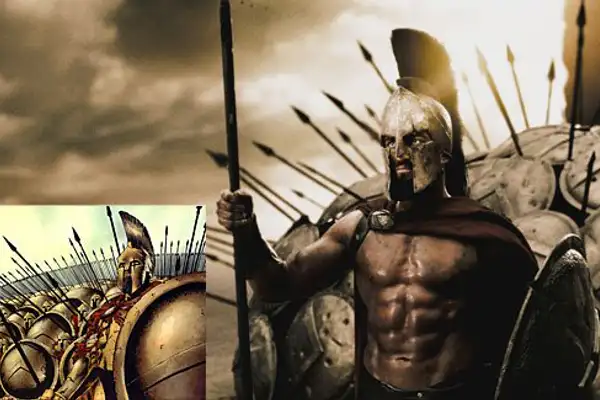
Summer, 480 BC. An army so vast it drank rivers dry on the march was pouring into Greece. Xerxes (the Persian God-King who ruled from Egypt to India) commanded over a million men, and he sent a messenger ahead to a narrow mountain pass called Thermopylae with what he considered a generous offer: surrender your weapons, submit, and you will receive fertile lands as honored allies of the Great King.
The messenger found King Leonidas (the Spartan king who refused to kneel) seated before his tent, calmly eating black broth — the notorious Spartan soup so foul that other Greeks joked it explained why Spartans were so eager to die. The messenger delivered Xerxes' terms with the full pomp of the Persian empire, emphasizing the hopelessness of the Greek position against a force that darkened the horizon.
Leonidas set down his bowl. He looked the messenger in the eye. And he answered with two words that have echoed across twenty-five centuries: 'Molon Labe' — 'Come and take them.' No speech. No threats. No negotiation. Just two words from a man eating soup, aimed at the most powerful ruler on earth. The silence after was so heavy the messenger forgot to move. Then he turned and walked away without a word.
The phrase was more than defiant wit. In Spartan culture, a warrior's weapons were his identity. The shield bore the lambda for Lacedaemon, and the most famous instruction a Spartan mother gave her son was: 'Return with your shield or on it' — come home victorious, or come home dead. To surrender your weapons was to surrender your existence as a Spartan.
They say the man with nothing to lose is invincible — but Leonidas had everything to lose. He just understood that some things are worse than death. Xerxes laughed when he heard the reply and ordered his generals to prepare for battle. He couldn't grasp what he was facing: not soldiers defending a pass, but a culture that had trained for exactly this moment since birth.
Spartans were taken from their families at seven and told their highest purpose was to die beautifully in battle. Leonidas (who had endured every one of those brutal tests himself) had just handed three hundred of them the chance. The messenger returned to the Great King's golden tent, and for perhaps the first time in his life, Xerxes felt the cold wind of doubt.
Two words, spoken over a bowl of bad soup, outlasted the Persian Empire. Greek independence fighters shouted them in the 1820s. They are carved into memorials and adopted by armies worldwide. Leonidas and his three hundred died at Thermopylae — but the words didn't. Some things you can't take, even with a million men.