
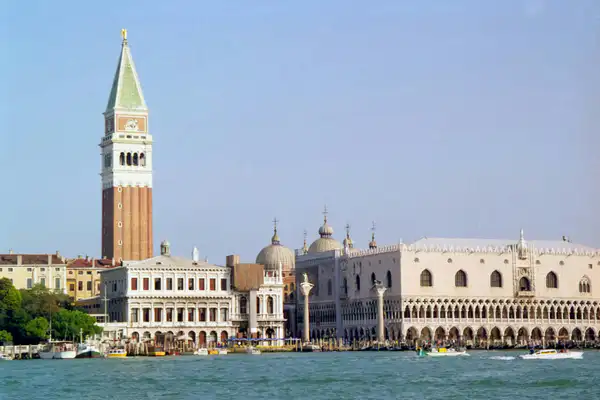
On the night of October 31, 1756, Giacomo Casanova — adventurer, writer, spy, and the most famous lover in European history — accomplished what no prisoner had ever done before: he escaped from the Piombi, the dreaded "Leads" prison cells located directly beneath the lead roof of the Doge's Palace. His escape remains one of the most celebrated prison breaks of all time, and his own account of it, "Histoire de ma fuite," is one of the greatest adventure narratives ever written.
Casanova had been arrested in July 1755 by order of the State Inquisitors on charges of espionage, practicing forbidden arts, and general libertinism. He was confined to the Piombi — cells in the attic of the Doge's Palace, directly under the lead plates of the roof. The cells were notorious: in summer, the lead turned them into ovens; in winter, the same metal conducted freezing cold until the cells became icy dungeons. Prisoners received minimal food, no exercise, and no hope. The Piombi was considered escape-proof. No one in the history of the Venetian Republic had ever broken out.
Casanova spent fifteen months planning. During rare exercise periods in the palace attic, he discovered an iron bolt in the courtyard floor. Over weeks he worked it free and concealed it in his cell. Using this bolt as a chisel, he spent months boring a hole through the wooden floor, hiding his work beneath his bed and mixing debris into his food scraps. His plan was to break through to the room below and escape through the palace.
But fate intervened. Just as his tunnel neared completion, the prison authorities moved him to a different cell. Casanova was devastated but refused to surrender. He recruited a fellow prisoner, a disgraced priest named Father Marino Balbi, who occupied a cell above his own. Through an ingenious scheme of smuggling the iron spike inside the spine of a large folio Bible — reasoning that the guards would never inspect a holy book — Casanova passed his tool to Balbi, who broke through the ceiling of his cell and onto the lead roof.
On the night of October 31, Casanova and Balbi climbed through the hole and emerged onto the lead plates of the Doge's Palace, high above Piazza San Marco. The next hours were a nightmare of vertigo and danger. They crawled across the steep lead roof in pitch darkness, at constant risk of falling to their deaths. Using a rope of bedsheets, Casanova lowered himself through a dormer window back into the palace interior. He broke through locked doors with his iron spike, navigated the empty corridors of the sleeping palace, and at dawn descended the Scala dei Giganti to the ground floor.
At first light on November 1, All Saints' Day, Giacomo Casanova walked out through the main entrance of the Doge's Palace dressed in his finest clothes, his filthy prison garments hidden beneath an elegant cloak. The guards, seeing a well-dressed gentleman departing at the hour when officials arrived for morning business, let him pass without a word. He hired a gondola, crossed the lagoon, and fled Venice forever. He later wrote that as the gondola carried him across the water, he looked back at the lead roof he had crawled across in darkness and laughed with the pure joy of a man who had achieved the impossible.