
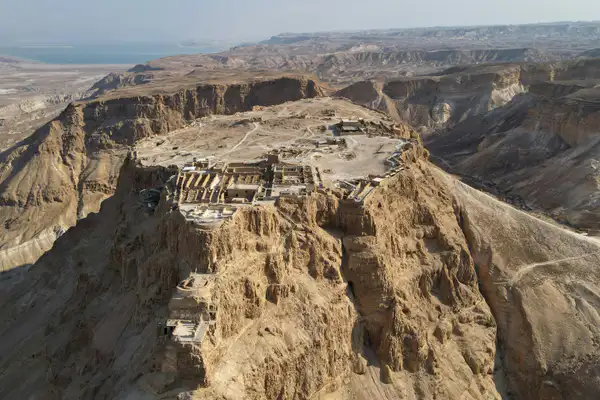
紀元73年の春、ローマ第十軍団がついにマサダの外壁を突破した。何か月もかけて断崖に攻城用の坂道を築き上げ、ようやく壁に到達したのだ。守備側は木材と土を詰めた急造の壁で応じた。破城槌で崩せないと見るや、ローマ兵は火を放った。一瞬、風がローマ側の攻城塔へ炎を吹きつけた——が、すぐに向きが変わった。日が暮れる頃には壁は消えていた。夜明けに何が起きるか、全員がわかっていた。一万の兵士が突入口から雪崩れ込む。もう壁はない。残されたのは、ひとつの選択だけだった。
彼らはただの避難民ではなかった。「シカリ」——「短剣の男たち」と呼ばれた、ユダヤ反乱軍の中で最も過激な一派だ。七年前、ローマ兵がエルサレムの神殿を略奪し、市民を虐殺した。ユダヤ全土が蜂起した。反乱軍は緒戦で鮮やかな勝利を収め、ローマの一個軍団を丸ごと壊滅させた。ローマは六万の大軍を送り込んだ。拠点はひとつ、またひとつと陥落した。エルサレムは焼かれ、神殿は瓦礫と化した。マサダは最後に残された砦だった——死海を見下ろす断崖の要塞に立てこもる960人。百年前にヘロデ王が蓄えた食料で、かろうじて生き延びていた。
その夜、指導者エルアザル・ベン・ヤイルが全員をヘロデ王の宮殿に集めた。ヨセフス——ローマに投降したユダヤ人司令官であり、この出来事を記録した唯一の人物——によれば、エルアザルは二度にわたって語りかけた。降伏した先に何が待っているか。男は鉱山か闘技場で死に、女は辱められ、子どもは生まれながらの奴隷として育てられる。「妻たちを辱めから守ろう」と彼は言った。「子どもたちに、奴隷の意味を知らせないまま逝かせよう」。彼は降参しろと言っているのではない。最後に残された自由な決断を、自分たちの手で下そうと言っているのだ。
男たちは泣いた。妻を抱きしめたまま、腕をほどけない者もいた。それでもエルアザルは続けた。周りを見てくれ、と。燃え落ちた城壁を。麓を絞め上げるように囲むローマの野営地を。交渉の余地などどこにもない。ローマは反乱者に慈悲をかけない。見せしめにするだけだ。エルサレム陥落後の十字架刑を、全員が知っていた——磔にする人間が多すぎて、木材が足りなくなったほどだ。捕虜はローマの大通りを戦利品のように引き回された。「仏の顔も三度まで」という言葉がある。だがこの人々は、三度どころではなかった。神殿を穢され、聖都を焼かれ、最後の壁まで崩された。もう耐える先に何も残っていなかった。一度にではなく、涙なしにではなく——だが、全員が頷いた。
次に起きたことは、整然としていた。ユダヤの律法は自殺を禁じている。それは全員が知っていた。だから、たった一人だけが自らの手で命を絶てばよい方法を考え出した。一人ひとりの男が家族のもとへ歩み寄り、抱きしめ、そして手を下した。持ち物はすべて焼いた。ただし食料の貯蔵庫だけは手つかずで残した——ローマへの伝言だ。我々は飢えたのではない。自ら選んだのだ、と。十人がくじで選ばれ、残りの者たちを手にかけた。その十人がまたくじを引いた。最後の一人が宮殿に火を放ち、自分の剣に身を貫いた。
夜が明けた。ローマ兵が突入口に殺到した——盾を固め、剣を抜き、壮絶な白兵戦を覚悟して。だが、待っていたのは静寂だった。ヨセフスはこう記している。「あらゆる方向に恐ろしいほどの孤独が広がり、宮殿の中にはただ炎があるばかりだった」。兵士たちは叫んだ。剣で盾を打ち鳴らした。応答は何もなかった。やがて、二人の女性と五人の子どもが、隠れていた貯水槽から這い出てきた。一人はエルアザルの親族だった。彼女がすべてを語った。歴戦の兵士たち——エルサレムの神殿を自らの手で焼いた者たち——は、死者を前に立ち尽くし、声を失った。
不思議なことがある。その後二千年にわたり、ユダヤ教を形づくったラビたちは、マサダについて一切語らなかった。一度も。彼らが選んだ英雄は別の人物だった——包囲下のエルサレムから交渉で脱出し、神殿も国土もなくても存続できる「学び」の伝統を打ち立てた一人の学者だ。マサダの剣と炎は、ラビたちが退けたものそのものだった。だが、物語は消えなかった。ローマ兵が山頂で出会ったあの沈黙——膝を屈するくらいなら死を選んだ人々の沈黙——は、二千年を経た今もこの高原に漂っている。誰にも答えられない。誰にも覆せない。