
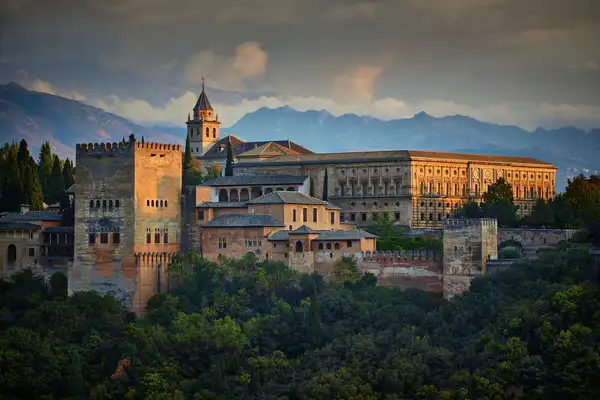
十五世紀のグラナダは、ヨーロッパに残された最後のイスラム王国だった。スペインの他の地域はとうにキリスト教軍に制圧されていた。この孤立した王国で、あらゆる権力の糸を握っていたのがアベンセラーヘス一族だ。北アフリカにルーツを持つ名門貴族で、歴代のスルタンを立てるのも降ろすのも、彼らの一存だった。まさに「王を作る者たち」。そして、それを許せない者がいた。
宿敵のセグリ一族が、あるとき恐ろしくシンプルな嘘をでっち上げた。アベンセラーヘスの騎士の一人が、スルタンの妃と密通している——たったそれだけだ。真実かどうかは関係ない。名誉がすべてだったあの宮廷では、疑惑が口に出された瞬間、それが判決になる。嫉妒と屈辱に飲み込まれたスルタンは、一族をまるごと一晩で消すことを決めた。
スルタンはアルハンブラ宮殿で盛大な宴を催し、アベンセラーヘス一族から三十六人の精鋭の騎士を招いた。彼らは最上の装いで参じた。グラナダにおいて、スルタン自らの招待は貴族が受けうる最高の栄誉だったからだ。「獅子の中庭」を抜け、十二頭の石の獅子が支える大理石の噴水を過ぎ、楽園の四つの川を模したという水路に沿って歩いた。自分たちが死に向かって歩いていることに、誰一人気づかなかった。
騎士たちは一人ずつ広間に通され、床の中央にある大理石の噴水盤の上で首を落とされた。流れる水が血を洗い流すから、次に入ってくる客には何も見えない。何の異変も感じない——自分の首に刃が触れるその瞬間まで。グラナダで最も高貴な一族が、宮殿で最も美しい部屋に一人ずつ足を踏み入れ、一人も出てこなかった。その部屋は今も彼らの名で呼ばれている——「アベンセラーヘスの間」。
彼らが命を落とした場所の真上には、イスラム建築史上最高傑作のひとつが広がっている。五千もの鈎乳石状の蜂の巣模様が、八芒星を描きながら天井いっぱいに連なっている。十六の窓から差し込む光が、まるで天井そのものが息をしているかのような錯覚を生む。天国を見上げている気分にさせる——それがこの天井の意図だった。だがその真下、大理石の噴水盤には、どうしても消えない赤茶色の染みがある。科学者は酸化鉄だと言う。しかし五百年間、訪れる人すべてが聞かされる話は同じだ。あれは三十六人の騎士の血。あまりに深く染み込んで、どんな水でも洗い流せなくなったのだと。
日本には「人を呪わば穴二つ」ということわざがある。だがスルタンは、穴を三十六も掘った上に、自分の王国の墳穴まで掘ってしまった。アベンセラーヘスを失ったグラナダは内戦で四分五裂し、フェルナンドとイサベルの軍勢が待っていたのはまさにその隙だった。古いスペインの歌にこうある。「アベンセラーヘスを殺したな。彼らこそグラナダの花だったのに」。一世代後、ヨーロッパ最後のイスラム王国は地上から消えた。
今日、毎年数百万の人々がこの広間を訪れる。見上げれば、人間の手が彫り上げた最も精緻な天井。見下ろせば、噴水に残る消えない染み。そしてその瞬間に胸を突くもの——それがアルハンブラ宮殿を世界のどの宮殿とも違うものにしている。上には美の頂点。下には血の記憶。ある文明が到達しえた最高の表現が、その文明が自らを滅ぼしたまさにその場所の真上に浮かんでいる。