
In 260 AD, Rome suffered the most humiliating moment in its eight-hundred-year history. Emperor Valerian marched east to fight Shapur I, the king of Persia, and lost everything — not just the battle, but himself. He was captured alive near the city of Edessa in modern Turkey, the only reigning Roman emperor ever taken prisoner by a foreign enemy. The Persians reportedly used him as a human footstool. Rome’s eastern half was now wide open, and the greatest empire on Earth was breaking apart.
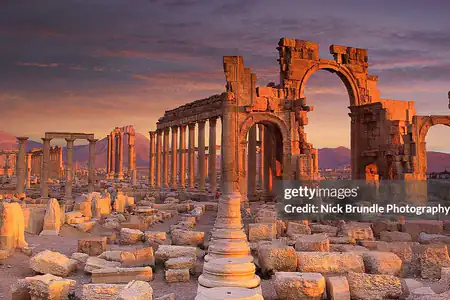
Enter Odaenathus — or Udhayna in his native Aramaic, meaning “little ear.” He was the lord of Palmyra, a fabulously wealthy caravan city in the Syrian desert that sat right on the trade routes between Rome and Persia. He wasn’t a Roman general or a governor. He was an Arab client king — a local ruler allied to Rome — whose Palmyrene mounted archers and heavily armored cavalry were some of the deadliest fighters in the ancient world. And he was about to make the biggest gamble of his life.
Odaenathus tried diplomacy first. He sent Shapur a caravan loaded with gold, silver, and luxury goods — basically an offer to talk. Shapur’s response was pure arrogance. “Who is this Odaenathus that he dares write to his lord?” the Persian king shot back. “Let him crawl to me with his hands bound.” Then he ordered the gifts thrown into the Euphrates. It was the kind of mistake that changes history. Instead of neutralizing the one man who could fight him, Shapur had just made his worst enemy.
So Odaenathus went to war. He first crushed two Roman rebels who had seized power in the chaos, proving his loyalty to the legitimate emperor back in Rome. Then he turned east, gathered his Palmyrene cavalry and allied warriors, and did what no one thought possible. He smashed across the Euphrates and marched all the way to Ctesiphon — the Persian capital near modern Baghdad. He reached the gates, wrecked everything in sight, and pulled back loaded with treasure. Then he did it again.
Rome’s emperor Gallienus, stuck fighting his own wars in the West, did the smart thing: he gave Odaenathus the title “Governor of the Entire Roman East.” Overnight, a desert caravan lord was officially running half the Roman Empire. But the title Odaenathus gave himself was even bolder — Palmyrene inscriptions call him “King of Kings,” the exact title used by Persian emperors since Cyrus the Great. The man Shapur told to crawl was now claiming Shapur’s own crown.
It ended at a banquet in 267 AD. Odaenathus and his eldest son Hairan were murdered by his own nephew, Maeonius — officially over a hunting insult. But the real question is who benefited from both father and heir dying on the same night. The answer: Zenobia, Odaenathus’s second wife, a brilliant queen who claimed descent from Cleopatra. With Hairan gone, her infant son became king and she became the real power. Maeonius was killed right after. Nobody ever got to ask him who gave the order.
Here’s the part that stays with you. Odaenathus spent his life saving the Roman Empire. He drove Persia back, held the eastern frontier together when nobody else could, and Rome rewarded him with every title and honor they had. Within a decade of his death, a Roman army marched into Palmyra, sacked it, and reduced it to a ruin that never recovered. The empire he saved destroyed the city he built. That’s the deal the powerful offer the useful — gratitude with an expiration date.