
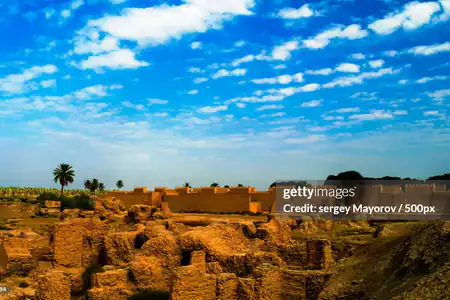
全人類がひとつの言葉を話していた世界を想像してほしい。旧約聖書の創世記11章は、そこから始まる。大洪水のあと、ノアの子孫たちは現在のイラク南部——ティグリス川とユーフラテス川に挟まれた平原にたどり着いた。石もない。木もない。あるのは泥だけ。彼らは川の泥をレンガに成形し、窯で焼き、天然アスファルト——今もイラクの地面から湧き出している——で接着した。そして、すべてを変える一言を口にした。「さあ、天まで届く塔を建てよう」
驚くべきことに、この塔は実在した。エテメンアンキ——シュメール語で「天と地の基礎の神殿」。バビロンの街にそびえ立っていた。1899年、ドイツの考古学者ロベルト・コルデヴァイが掘り出したとき、聖書の記述とぴったり一致するものが現れた。一辺91メートルの巨大な正方形の土台。窯焼きレンガとアスファルトで築かれている。何世紀にもわたり再建が繰り返され、紀元前600年ごろ、ネブカドネザル2世のもとで最盛期を迎えた。王自身がこう刻んでいる。「余はその頂を天に競わせた」
七層。頂上には青い釉薬レンガが太陽を受けて輝いていた。最上階に鎮座するのは主神マルドゥクの神殿。高さはおよそ91メートル——自由の女神とほぼ同じだ。果てしなく平らな大地の上、50キロ先からでも見えた。山のない国に、人間が造った山。紀元前460年ごろ、ギリシャの歴史家ヘロドトスが実際に目にし、塔の頂で毎夜ひとりの巫女が神の降臨を待っていたと書き残している。あのギリシャ人ですら、息を呑んだ。
「バベル」という名前そのものが、壮大な皮肉だ。バビロニア人は自分たちの都を「バブ・イリ」——「神の門」と呼んだ。だがヘブライ人はこれを「バラル」——「混乱させる」と読み替えた。神の門が、混乱の地になった。しかもこの物語、ヘブライ人のオリジナルですらない。紀元前2100年のシュメール詩——創世記より千年も前の作品——にすでに同じ筋書きがある。かつて人類はひとつの言葉を話していたが、神々がそれをかき乱した、と。言語の混乱は、聖書よりはるか昔から、メソポタミアの記憶だった。
建てた本人の肖像まで残っている。2011年、アッシリア学者アンドリュー・ジョージがネブカドネザル時代の黒い石板を公開した。王が塔のそばに立ち、建築の杖を握り、頂上を見上げている。完成した塔を描いた、世界で唯一の図像だ。地上で最も強大な男が、自分の造り上げたものを仰ぎ見ている——その表情は、石に刻まれた誇りとしか言いようがない。
塔は神に打ち倒されたわけではない。もっと平凡なものに倒された——時間だ。紀元前331年、ペルシャ帝国を叩き潰したアレクサンドロス大王がバビロンに入ったとき、塔はすでに崩壊しかけていた。ペルシャが200年間放置したのだ。アレクサンドロスは1万の兵にがれきの撤去を命じた。2ヶ月かけて、ほとんど進まなかった。そして紀元前323年、ネブカドネザルの宮殿で熱病に倒れ、死んだ。32歳。以後、誰も再建を試みていない。
「驕れる者は久しからず」と平家物語は諭す。だがバベルの塔の物語は、もう少し厄介なことを言っている。人類は驕ったのではない。ひとつになったのだ。同じ言葉を話し、同じ塔を建て、同じ夢を見た。そしてまさにその団結が——神を怯えさせた。
今日、バグダッドの南85キロに、水の溜まった四角い穴がある。古代世界最大の塔が立っていた場所だ。2019年、ユネスコの世界遺産に登録された。だがこの塔の本当の記念碑はイラクにはない。地球上のすべての言語の中にある。ソウルの子どもとサンパウロの子どもが同じ夕焼けを見つめながら、それを伝え合う言葉をひとつも持っていないという事実の中に。レンガは消えた。アスファルトは何世紀も前に崩れた。だが、あの混乱だけは——永遠だ。