
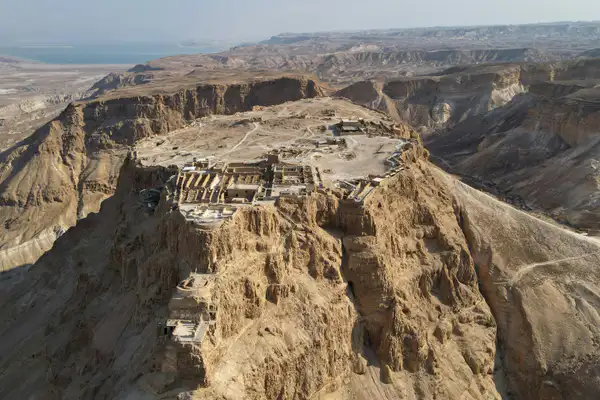
公元73年春天,罗马第十军团终于攻破了马萨达的外墙——他们花了好几个月,硬是在悬崖上堆出一条攻城坡道。守军临时用木头和泥土筑了一道应急墙,罗马人撞不开,索性放火烧。风一度把火焰吹向罗马人自己的攻城塔——但很快就转了向。天黑时,墙已经不存在了。所有人都清楚天亮意味着什么:一万名士兵从缺口涌入。没有墙了,只剩下一个选择。
这群人不是普通难民。他们是“短刀党”——犹太起义中最极端的一支武装。七年前,罗马士兵洗劫了耶路撒冷圣殿,屠杀平民,整个犹太地区揭竿而起。起义军初期打出了漂亮仗,全歼过罗马一个完整军团。随后罗马调来六万大军,逐一碾碎每个据点。耶路撒冷被烧成废墟,圣殿化为灰烬。马萨达是最后的钉子户——960个人守在死海边的悬崖堡垒上,靠希律王一百年前囤下的粮食活着。
那天夜里,首领以利亚撒·本·亚尔把所有人召集到希律王的宫殿里。据约瑟夫斯记载——此人原是犹太指挥官,后来投靠了罗马,也是留下唯一记录的人——以利亚撒前后讲了两番话。他描述了投降后等着他们的命运:男人死在矿井和斗兽场里,女人遭受凌辱,孩子从小就是奴隶。“让我们的妻子免于屈辱,”他说,“让我们的孩子永远不必知道奴役是什么滋味。”他不是在叫大家放弃。他是在问:你们还愿意做最后一个自由人的决定吗?
男人们哭了。有人抱着妻子,怎么也放不开手。但以利亚撒没有停。他让他们看看四周——烧焦的城墙,山脚下像绳套一样收紧的罗马营地。没有什么好谈判的。罗马对叛军从来只有一个态度:杀一儆百。耶路撒冷陷落后那些十字架刑场,所有人都听说过——钉的人太多,士兵连做十字架的木头都用光了。被俘的犹太人在罗马街头被当战利品一样游街示众。不是一下子同意的,也不是没有眼泪——但最终,所有人都点了头。
接下来发生的事井然有序。犹太律法禁止自杀,他们心里清楚。所以他们想出一个办法,让最终只有一个人需要亲手了结自己。每个男人走向家人,抱紧他们,然后动了手。他们烧掉了所有财物,唯独留下粮仓不动——这是说给罗马人听的:我们不是被饿死的,是我们自己选的。十个人被抽签选出,负责杀死剩余的人。这十个人再抽一次签。最后那个人点燃了宫殿,然后把剑刺进自己的身体。中国人说“宁为玉碎,不为瓦全”。这960个人,碎得干干净净。
天亮了。罗马士兵冲进缺口——盾牌紧锁,刀剑出鞘,做好了打一场恶战的准备。迎接他们的是沉默。约瑟夫斯写道:“四面八方是令人恐惧的死寂,宫殿中只有火焰。”士兵大喊,用剑猛砸盾牌,什么回应都没有。然后两个女人和五个孩子从一个隐蔽的蓄水池里爬了出来。其中一人是以利亚撒的亲属。她把一切都告诉了罗马人。这些身经百战的老兵——曾经亲手烧掉耶路撒冷圣殿的人——站在满地的死者面前,一句话都说不出来。
但有一件事很奇怪:此后整整两千年,塑造犹太教的那些拉比们从未提起过马萨达。一次都没有。他们选了另一个英雄——一位靠谈判走出被围耶路撒冷的学者,用“学问”这一样东西,撑起了一个没有圣殿、没有国土也能延续的传统。马萨达的刀剑和烈火,恰恰是他们所拒绝的。但故事还是活了下来。罗马人在山顶上遇到的那片沉默——属于那些宁死不跪的人——两千年后依然回荡在这片高原上空,无人能答,无可辩驳。