
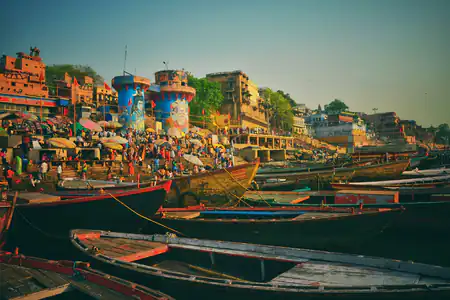
1896年,美国作家马克·吐温坐船顺恒河而下,来到了瓦拉纳西。后来他写下了一句被引用至今的话:这座城比历史更古老,比传说更古老,看起来比它们加起来还要老上两倍。他眼前的景象已经存在了几千年——石阶层层没入河水,屋顶上密布寺庙,火葬的烟火日夜不熄。世界上很多城市都号称最古老。但瓦拉纳西不一样——它从来没有停止过做自己。
考古学家在两条河交汇处往下挖,挖出了大约公元前1800年的陶器。再往下,空空如也。再往上,一层叠着一层,印度历史的每个时代像年轮一样压在泥土和石头里。没有断层,没有荒废,没有沉默。印度最古老的经典《梨俱咐陀》管这里叫迦尸——光之城。别的古城被遗弃了,被沙漠吞掉了,过了千百年才被人重新发现。迦尸不一样,它从来就没暗过。
大约公元前528年,佛陀走到瓦拉纳西城外的鹿野苑,讲了人生中第一场法。他没有随便挑地方——当时的瓦拉纳西已经是整个已知世界的思想中心。台下只有五个人,都曾跟他一起苦修,后来觉得他放弃了苦行而愤然离去。就在这五个人面前,佛陀讲出了中道、四圣谛、灭苦之路——后来改变了半个亚洲的思想,就在这里诞生了。那时候,这座城已经有一千年的历史。
征服者一次又一次对瓦拉纳西下手。1194年,入侵军队摧毁了近千座寺庙。1669年,莫卧儿皇帝奥朗则布拆掉了全印度最神圣的湿婆神庙,在原址上建起清真寺,还给城市改了名字。没有人用那个名字。1780年,一位名叫阿希尔雅拜·霍尔卡的女王在旁边建起了新庙。一位锡克教国王又给庙顶镀上了黄金。野火烧不尽,春风吹又生——但瓦拉纳西靠的不是春风,是三千年不灭的信仰。
瓦拉纳西真正特殊的地方,在于它的逻辑。印度教经典说,这座城坐落在湿婆神的三叉戟上,悬浮在天与地之间。宇宙毁灭的那天,湿婆会把它从洪水中托起来。注意——神圣的不是建筑,是脚下的大地本身。所以你可以烧掉每一座庙,瓦拉纳西还是瓦拉纳西。印度教徒相信,任何人只要在城界之内死去,就能永远摆脱轮回。你毁得了神的殿堂,毁不了神脚下的土地。
但瓦拉纳西不是博物馆。走进它的小巷——窄到两个人并排都勉强——你会同时碰上牛、摩托车、送葬队伍和放学的孩子。这座城出过卡比尔,一个织布工出身的叛逆诗人,他的诗句到今天还被印度教徒、穆斯林和锡克教徒共同传诵。还有比斯米拉·汗,每天黎明在恒河边吹了七十年的管乐,有人劝他搬走,他说:我离不开我的河,也离不开我的神。
每天傍晚,达萨什瓦梅德河坛上,祭司挞舞巨大的铜灯划破暮色,成千上万的人从石阶上和河面的小船上注视着火光。每天清晨,太阳还没越过对岸,沐浴者便踩着灰蒙蒙的微光走下石阶,走进河里。这座城做着三千年来每天都在做的事:面朝河水,祈祷,焚烧逝者,然后继续活下去。