
About
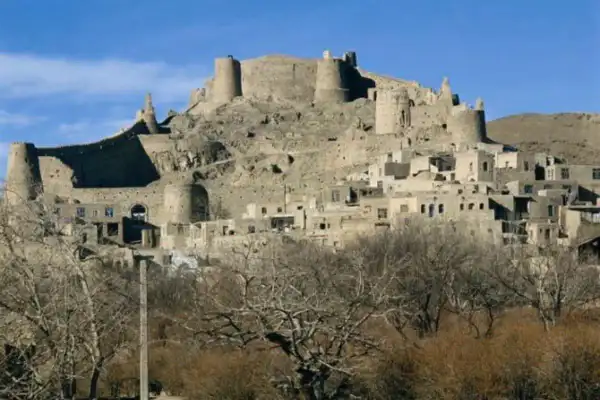
Alamut Castle — Qal'eh-ye Alamut, the "Eagle's Nest" — is one of the most legendary fortresses in human history, perched atop a narrow rock ridge at 2,163 meters above sea level in the heart of the Alborz Mountains of northern Iran. For 166 years, from 1090 to 1256 CE, this seemingly impregnable stronghold served as the headquarters of the Nizari Ismaili state and the base of operations for the Order of the Assassins (Hashashin) — the most feared and mysterious sect of the medieval world, whose name gave the English language the very word "assassination." The castle was originally built around 860 CE by a local Justanid ruler on a ridge so narrow and precipitous that it could only be approached by a single winding path. In 1090, Hassan-i Sabbah — a brilliant Ismaili da'i (missionary) educated in Cairo and radicalized by the Fatimid schism — infiltrated the fortress through a remarkable act of stealth and persuasion. According to the chroniclers, Hassan converted the garrison and the local population one by one until the Seljuk commander awoke to discover that the castle was no longer his. Hassan reportedly paid the commander 3,000 gold dinars as compensation and sent him away peacefully. From that day until his death 35 years later, Hassan-i Sabbah never left Alamut, ruling his growing network of mountain fortresses from this single rock. What Hassan built at Alamut was unprecedented: a state within a state, a network of castles stretching across Persia and Syria, defended not by conventional armies but by fidai — self-sacrificing agents who carried out precisely targeted political killings against Seljuk generals, Abbasid officials, and Crusader lords. The psychological impact was immense. No ruler in the Islamic world or the Crusader states felt safe. The Assassins killed the Seljuk vizier Nizam al-Mulk in 1092, the Fatimid caliph al-Amir in 1130, and Conrad of Montferrat, King of Jerusalem, in 1192. Their weapon was not the sword of mass warfare but the dagger of surgical precision — and the willingness to die in the act. But Alamut was far more than a fortress of killers. Hassan-i Sabbah was a scholar and bibliophile who assembled one of the finest libraries in the medieval Islamic world. The castle housed an astronomical observatory, a vast collection of manuscripts on philosophy, theology, science, and mathematics, and a community of scholars who carried on intellectual inquiry even as the fidai carried out their missions below. When the great polymath Nasir al-Din al-Tusi was held at Alamut (whether as guest or prisoner remains debated), he produced some of his most important astronomical and philosophical works within its walls. The end came in 1256 when the Mongol warlord Hulagu Khan, grandson of Genghis Khan, marched against the Ismaili fortresses as a prelude to his destruction of Baghdad. The last Ismaili grand master, Rukn al-Din Khurshah, surrendered Alamut after a brief siege, reportedly hoping for mercy. Hulagu ordered the castle's legendary library destroyed — though al-Tusi, who had switched his allegiance to the Mongols, is said to have saved the most valuable scientific and philosophical manuscripts before the flames consumed the rest. The Mongols dismantled the fortifications, and Alamut fell into ruin. Today, the shattered walls and cisterns clinging to the ridgetop above the lush Alamut Valley remain one of Iran's most dramatic and atmospheric archaeological sites — a place where the wind carries echoes of a sect that terrified empires and changed the course of history.
Historical Significance
“Alamut Castle is the birthplace of one of the most consequential and misunderstood movements in medieval history. The Nizari Ismaili state that Hassan-i Sabbah founded here in 1090 CE pioneered a form of asymmetric warfare that would echo through the centuries. Surrounded by vastly more powerful enemies — the Seljuk Empire, the Abbasid Caliphate, the Crusader states, and eventually the Mongol Empire — the Nizari Ismailis survived for 166 years not through conventional military power but through a combination of mountain fortifications, political assassination, diplomatic maneuvering, and ideological conviction. The fidai ("self-sacrificers") were trained agents who could infiltrate enemy courts, sometimes spending years in deep cover before striking. Their first and most famous victim was Nizam al-Mulk, the powerful Seljuk vizier and author of the Siyasatnama, killed in 1092 — just weeks before the death of Sultan Malik-Shah I, which plunged the Seljuk Empire into civil war. The intellectual legacy of Alamut is as significant as its military one. Hassan-i Sabbah was a trained theologian and philosopher who established Alamut as a center of learning. The castle's library was renowned throughout the Islamic world, containing works on Ismaili theology, Greek philosophy, astronomy, mathematics, and medicine. The Nizari Ismailis developed sophisticated theological doctrines, including the concept of ta'lim (authoritative teaching) and the cyclical interpretation of religious history. When the polymath Nasir al-Din al-Tusi resided at Alamut and other Ismaili castles from roughly 1232 to 1256, he produced groundbreaking works including the Akhlaq-i Nasiri (Nasirean Ethics) and astronomical tables that later influenced Copernicus. Al-Tusi's rescue of key manuscripts from the Alamut library before its destruction by the Mongols was one of the great acts of cultural preservation in medieval history. The legend of the Assassins grew far beyond the historical reality. Marco Polo's account — written decades after the fall of Alamut and based on hearsay — described a "Paradise Garden" where young men were drugged with hashish and awakened amid beautiful gardens, flowing streams, and beautiful women, then told they had glimpsed paradise and could return only by dying in the master's service. This account, almost certainly fictional, gave rise to the persistent myth that the word "Assassin" derives from "hashish-user" (hashshashin). Modern scholars debate the etymology vigorously — the term may instead derive from assas (foundation) or from a derogatory term used by enemies — but the Marco Polo legend proved irresistible to European imagination and has shaped Western perceptions of the movement for seven centuries. The historical reality was far more complex: a sophisticated Ismaili state with a genuine theological mission, a functioning government, an intellectual tradition, and a military strategy born of desperate necessity against overwhelming odds.”
物語
7History
👑 Built by
Originally built by a Justanid ruler (~860 CE); seized and transformed by Hassan-i Sabbah (1090 CE)
~860 CE - Alamut Castle built by a Justanid ruler of Daylam on a narrow ridge in the Alborz Mountains
1090 - Hassan-i Sabbah infiltrates and seizes Alamut through conversion of the garrison; establishes the Nizari Ismaili state
1092 - Nizari fidai assassinate Nizam al-Mulk, the powerful Seljuk vizier, near Isfahan
1092-1118 - Seljuk sultans launch repeated military campaigns against Alamut; all fail to capture it
1124 - Hassan-i Sabbah dies at Alamut after 34 years without ever leaving the castle; succeeded by Kiya Buzurg-Ummid
1164 - Imam Hasan II declares the Qiyama (spiritual resurrection), inaugurating a new era in Nizari theology
1192 - Nizari agents assassinate Conrad of Montferrat, King of Jerusalem, at Tyre
~1232-1256 - Nasir al-Din al-Tusi resides at Ismaili castles including Alamut; produces major philosophical and astronomical works
1256 - Hulagu Khan's Mongol army besieges Alamut; Grand Master Rukn al-Din Khurshah surrenders
1256 - Mongols destroy the legendary library of Alamut; al-Tusi reportedly saves key scientific manuscripts
1256 - Mongol forces systematically dismantle the castle fortifications
1275 - Brief Ismaili reoccupation of Alamut; Mongols recapture and destroy it again
2004 - Major archaeological excavation begins under Iranian Cultural Heritage Organization