
About
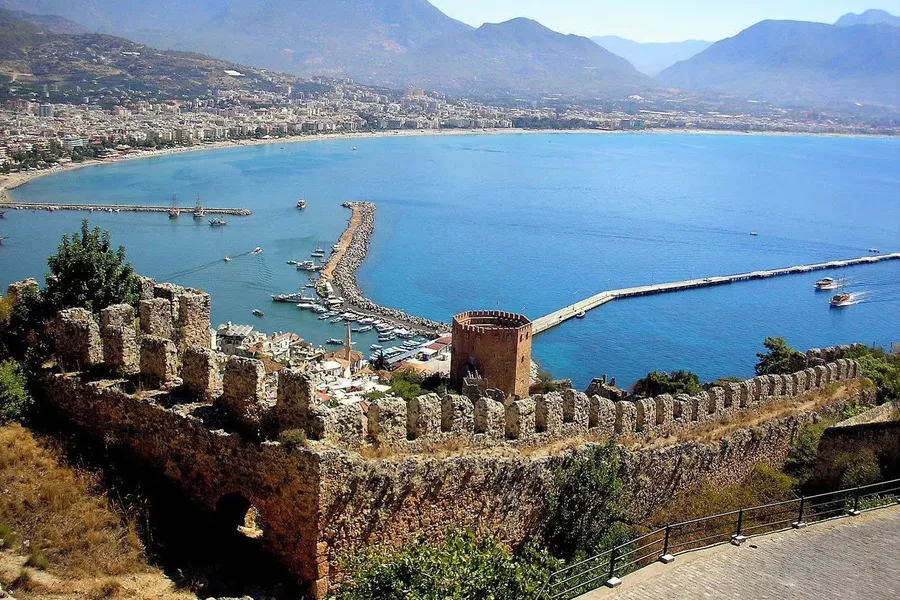
Perched 250 meters above the turquoise Mediterranean, Alanya Castle is one of the finest surviving examples of medieval Seljuk military architecture. Its 6.5 kilometers of walls, punctuated by 140 towers, cascade down a dramatic rocky peninsula that has been fortified since the 2nd century BC. The castle complex encompasses the İç Kale (inner fortress), the Ehmedek fortification, the iconic Kızıl Kule (Red Tower), a medieval shipyard carved into the cliff, Byzantine churches, Ottoman mosques, and a labyrinth of secret tunnels still being excavated today. For centuries it served as a winter capital for Seljuk sultans and a haven for pirates, merchants, and monks alike. The site blends Roman foundations, Byzantine walls, Seljuk grandeur, and Ottoman additions into a living timeline of Mediterranean civilization.
Historical Significance
“Winter capital of the Seljuk Empire, key Mediterranean naval base, and one of the best-preserved medieval fortress complexes in Turkey. The Red Tower and shipyard are among the only surviving examples of Seljuk naval architecture.”
Geschichten
4History
👑 Built by
Sultan Alaeddin Keykubad I
2nd century BC – Hellenistic settlement and initial fortifications built on the peninsula
67 BC – Roman general Pompey clears the coast of pirates and integrates the port
7th–13th century – Byzantine stronghold known as Kalonoros ('Beautiful Mountain')
1221 – Sultan Alaeddin Keykubad I conquers the fortress after a legendary 60-day siege using 15,000 goats with torches
1226 – Construction of the Kızıl Kule (Red Tower), an octagonal masterpiece of Seljuk military engineering
1227 – The Tersane (shipyard) carved into the cliff face, housing five vaulted chambers
1230 – Akşebe Sultan builds the first Seljuk mosque and tomb within the castle walls
15th–17th century – Ottoman period; castle serves as garrison and pirates use the sea caves below
1948 – Damlataş Cave accidentally discovered during harbor construction
2000 – Castle complex inscribed on the UNESCO Tentative List
2022 – Secret tunnel network discovered near the shipyard, still under excavation